
Last updated October 31, 2026
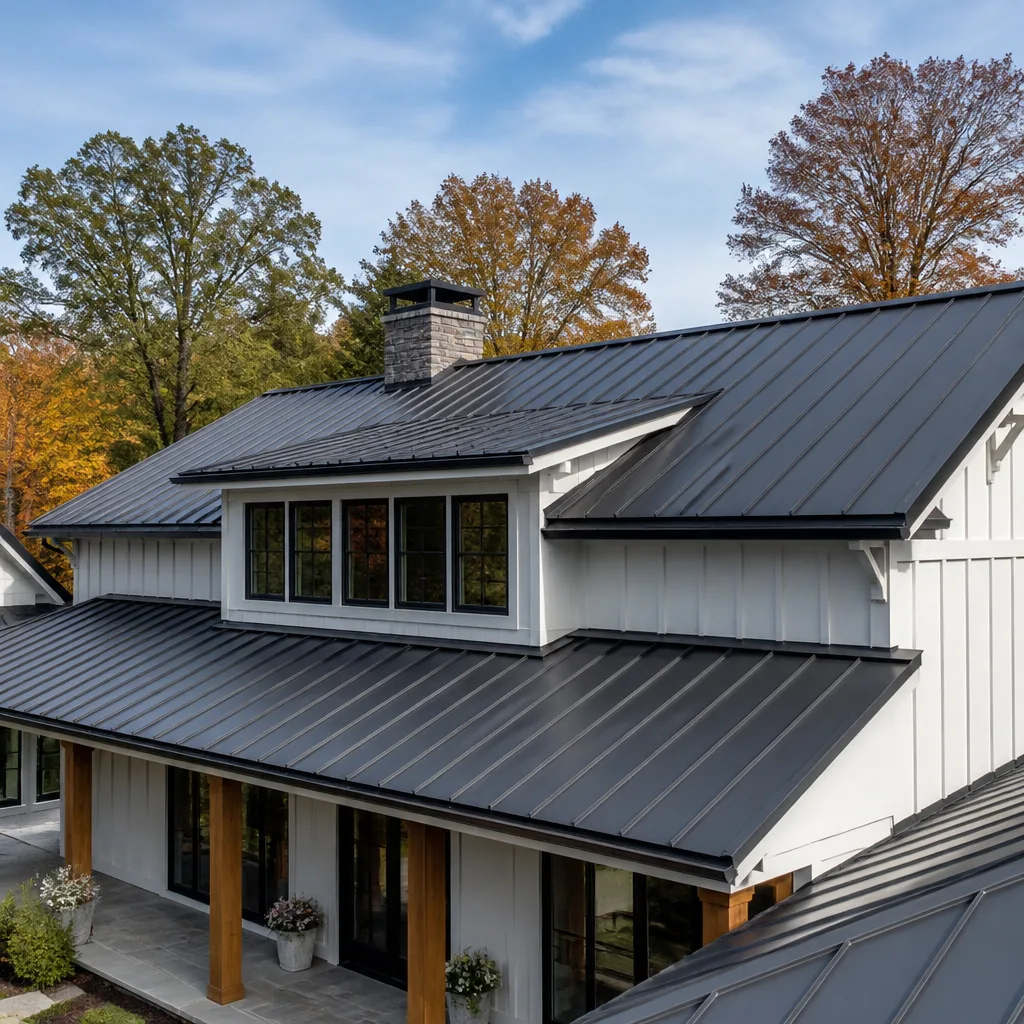 Metal roofing
 Architectural shingles
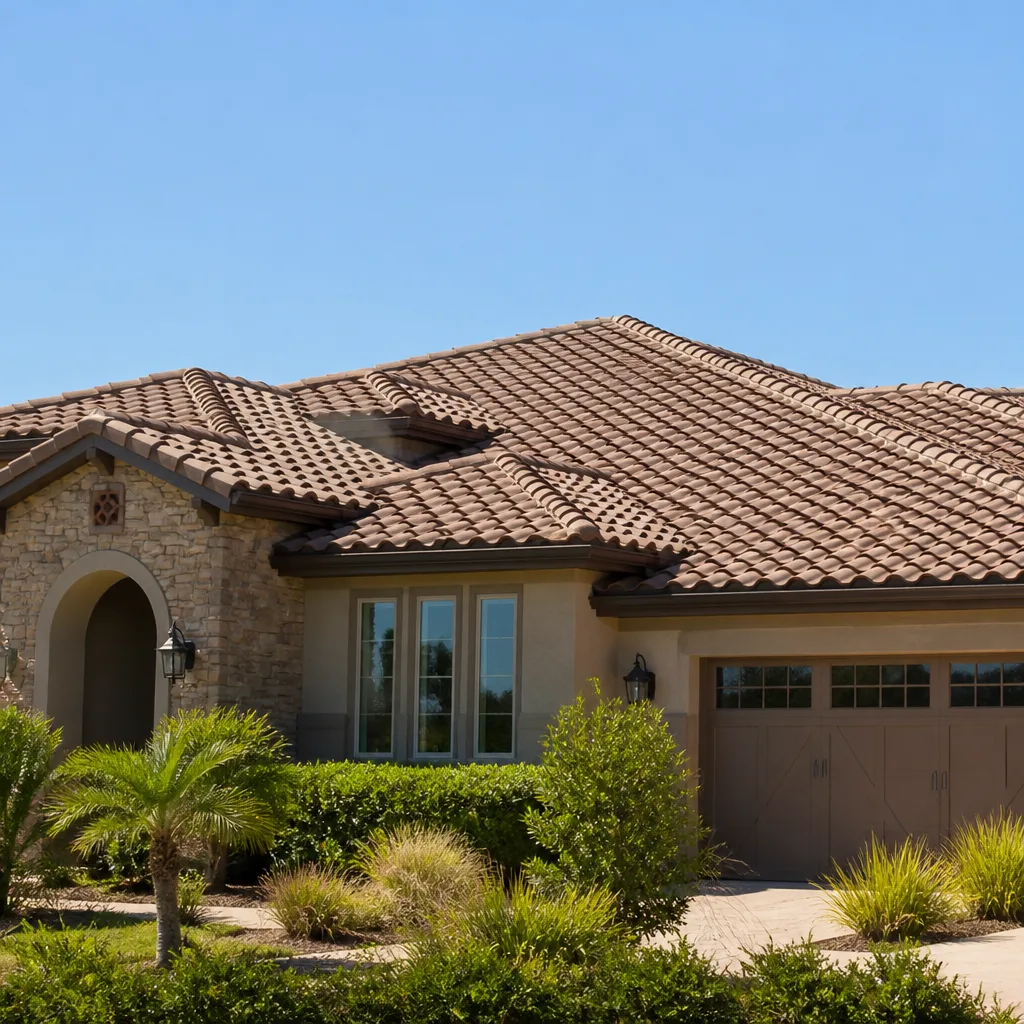 Tile roofing
 GAF
 Owens Corning
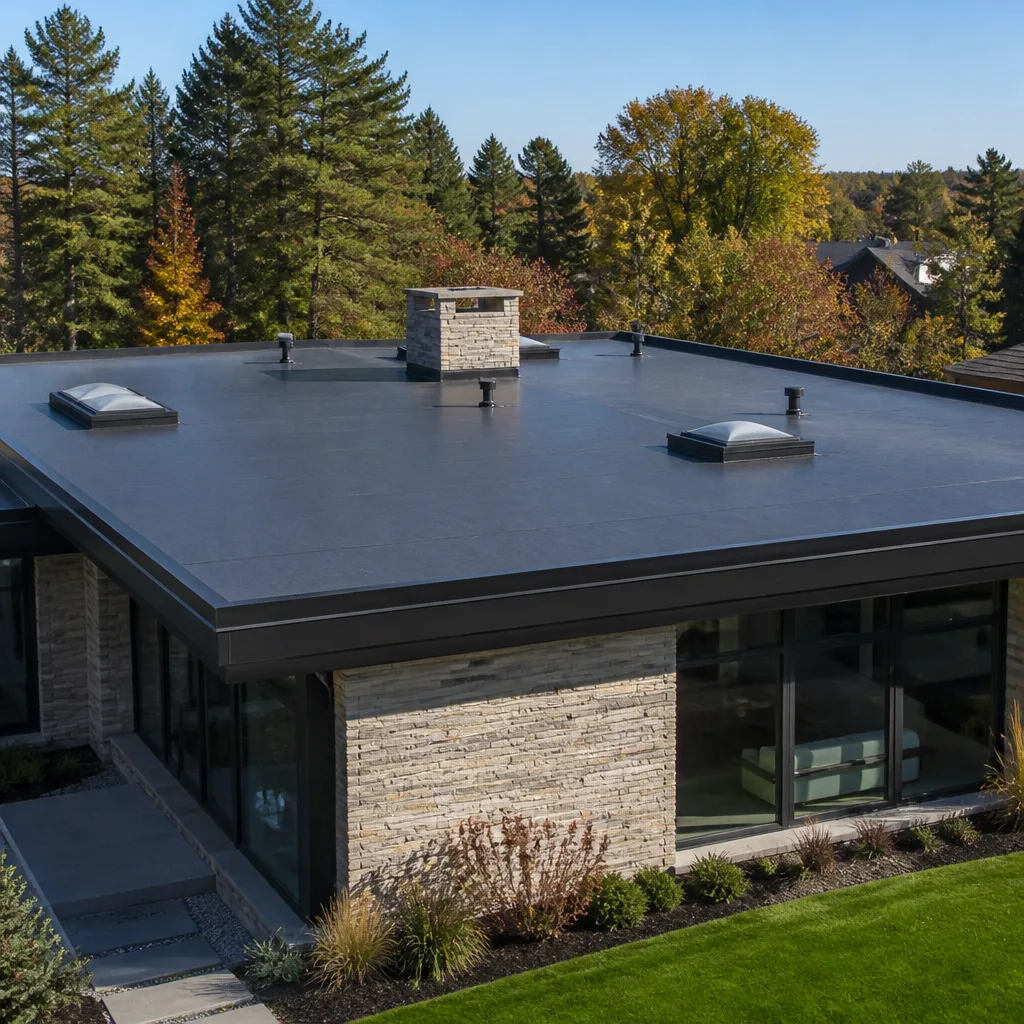 Flat & low-slope
Free roof inspection with deck photos before we talk money - GAF and Owens Corning certified installation
Roofing Emergency Preparedness Guide for Costa Mesa Homes
When a roofing emergency hits during a Santa Ana event, every qualified roofer in Orange County is already dispatched. Homeowners who haven’t pre-identified their contractor wait days for help while water enters their structure. Costa Mesa sits in a peculiar weather corridor: we get less than 13 inches of rain annually, yet when El Niño systems arrive, they arrive with concentrated force. Combine that with Santa Ana winds gusting 40 to 70 mph through the canyons, and you have a recipe for roofing failures that feel sudden but are almost always years in the making. This guide will teach you the pre-positioned preparedness plan that separates a minor inconvenience from a five-figure interior repair, and you can find more guides & resources on our blog. You’ll learn what to do before, during, and after a roofing emergency, how to document damage for insurance, and how to make decisions without panic clouding your judgment.
Quick Answer
A roofing emergency preparedness plan for Costa Mesa homes means three things: pre-qualifying a roofing contractor before you need one, completing a seasonal inspection and maintenance routine before Santa Ana or El Niño season, and knowing exactly what to document and who to call in the first hour after damage occurs. The goal is to compress your response time from days to hours, because in Costa Mesa’s tight roofing market, the homeowners who get same-day emergency response are the ones who made their calls before the storm arrived.
Styles & brands we work with
Table of Contents
- Why Costa Mesa Roofing Emergencies Are Almost Never Truly Sudden
- The 48-Hour Pre-Storm Preparation Checklist for Costa Mesa Homes
- How to Document Roofing Damage for Insurance: The Order That Matters
- Emergency vs. Urgent: Knowing What Requires Same-Day Response
- The Pre-Qualified Contractor Protocol: Decisions Before the Pressure
- How to Safely Tarp a Damaged Roof Without Making It Worse
- Santa Ana Winds and Your Roof: What Costa Mesa Homeowners Need to Know
- El Niño Rain Events: The Roof Risks Most Costa Mesa Homes Face
Why Costa Mesa Roofing Emergencies Are Almost Never Truly Sudden
We’ve inspected hundreds of roofs across Costa Mesa, and the pattern repeats itself with remarkable consistency. A homeowner calls us in a panic after a section of shingles peeled back during a wind event. When we get on the roof, we find the real story: granule loss that started years ago, sealant that failed two summers prior, flashing that was improperly installed during a previous repair. The Santa Ana wind didn’t cause the failure. It exposed it.
Costa Mesa’s climate does something specific to roofing materials. Our dry summers bake asphalt shingles, accelerating granule loss and sealant breakdown. Then, when Santa Ana winds arrive in September and October, those degraded materials have nothing left to resist the uplift. The same principle applies to El Niño rain seasons. Roofs that have been quietly developing micro-failures for years suddenly leak during the first sustained downpour, because water finally has enough volume to exploit every weakness.
This is the core thesis of emergency preparedness: the emergency isn’t the problem. The deferred maintenance before the emergency is the problem. Homeowners who understand this shift their focus from reactive panic to proactive positioning. A roof inspection in Costa Mesa performed during the dry season costs a fraction of what emergency repair costs during a storm cycle, and it gives you the information you need to make sound decisions before urgency forces your hand.
Consider this sequence. A homeowner who inspects in June discovers a few lifted shingles and cracked flashing. The repair takes an afternoon and costs a few hundred dollars. That same homeowner, skipping the June inspection, discovers the same issues in January when water is streaming through a bedroom ceiling. The repair is now an emergency. It costs three to five times more, and the interior drywall, insulation, and paint add thousands more. The roof problem was identical. The timing transformed the cost.
In our experience, Costa Mesa homes built before 2000 are the most vulnerable. Building codes changed that year, and many older roofs in Mesa Verde, College Park, and Eastside Costa Mesa were installed under standards that don’t match current wind uplift requirements. If your home falls into that category and you haven’t had the roof assessed in the last five years, you’re operating on borrowed time.
The 48-Hour Pre-Storm Preparation Checklist for Costa Mesa Homes
When the National Weather Service issues a high wind watch or flash flood watch for Orange County, you have a window. That window is typically 48 hours. Here’s exactly how to use it, specific to Costa Mesa’s storm patterns.
Step 1: Visual ground-level inspection. Walk the perimeter of your home and look up. You’re checking for visible shingle curl, missing shingle tabs, sections that look darker or wetter than surrounding areas, and any debris accumulated on the roof surface. Use binoculars if you have them. Do not climb on the roof. Santa Ana conditions can produce gust spikes that catch extension ladders.
Step 2: Clear the drainage paths. Costa Mesa homes, particularly those in the flatland areas west of the 55 freeway, depend on gutter and downspout systems to channel rainwater away from the foundation. A blocked downspout during a heavy El Niño rain event can back water up under the eave line and into the roof deck. Clear leaves, pine needles, and any other debris from gutters and downspouts. Check the scuppers if you have a flat or low-slope roof section.
Step 3: Trim overhanging branches. Santa Ana winds turn tree limbs into roofing projectiles. Eucalyptus and pine trees common across Costa Mesa are particularly hazardous. Any branch that extends over your roof line is a potential puncture source. Trim it back now, not when the wind is already blowing.
Step 4: Secure loose yard items. Patio furniture, trash bins, trampolines, and basketball hoops become airborne during 60 mph gusts. Secure them or move them inside. We’ve seen a plastic trash can put a hole through a composite shingle roof during a particularly violent Santa Ana event on the west side.
Step 5: Document the pre-storm condition. Take dated photos of your roof from multiple angles at ground level and from any second-story windows. These photos establish the baseline condition before the storm. If damage occurs, you’ll have proof of what the roof looked like before the event, which is valuable for insurance claims.
Step 6: Know your contractor’s phone number. This is the step most homeowners skip. If you don’t have a pre-qualified roofer identified, you’ll be calling during the storm or after, competing with thousands of other Orange County homeowners for a limited number of emergency response slots. Have the number saved. Have a backup number saved.
How to Document Roofing Damage for Insurance: The Order That Matters
Documentation order matters more than most homeowners realize. Insurance adjusters process claims based on evidence, and evidence has a hierarchy. Here’s the sequence we recommend to every Costa Mesa homeowner we work with.
The documentation sequence:
- Interior damage first. If water has entered your home, document the interior before you touch anything. Photograph the wet drywall, the water stains on the ceiling, the damaged flooring, and any personal property affected. Do not clean it up first. The visible active damage is your strongest evidence of loss. Time-stamp every photo.
- Exterior roof damage second. Photograph the roof from all accessible angles. Ground-level photos show the overall scope. Second-story window photos show closer detail. If safe to do so, ladder-level photos showing specific damaged areas are even stronger. Never walk on a damaged roof, especially after rain, when surfaces are slick and the substrate below may be compromised.
- Context photographs third. Photograph surrounding trees that may have contributed, the direction of wind damage, and any debris that struck the roof. These photos help the adjuster understand causation, and causation determines whether the claim is covered.
- Video walkthrough fourth. A continuous video walking from interior to exterior, narrated with dates and observations, creates a coherent narrative that individual photos can’t. State the date, the time, what happened, and what you’re seeing as you record.
- Damage mitigation documentation fifth. When you take emergency action, such as tarping, photograph the process. The insurance policy typically requires you to mitigate further damage, and documenting that effort demonstrates compliance. If you hire a contractor for emergency mitigation, save every receipt.
Call your insurance company only after the first two documentation steps are complete. The claims representative will ask specific questions about the damage, and you’ll answer more accurately with the evidence in front of you. Most policies have a reporting window, but that window is measured in days, not hours. Documentation first, call second.
One more Costa Mesa-specific note. Insurance adjusters in Southern California see a high volume of wind claims from Santa Ana events. They know the difference between pre-existing granule loss and fresh wind damage. If your roof was already in poor condition before the storm, the claim may be partially or fully denied. This is another reason pre-storm documentation matters: it establishes whether the storm actually caused the damage or merely revealed it.
Emergency vs. Urgent: Knowing What Requires Same-Day Response
Not every roofing problem is an emergency. During Costa Mesa’s high-demand storm season, calling a roofer for same-day response on a non-emergency issue ties up resources that should go to homeowners with active water intrusion. Here’s how to categorize what you’re seeing.
True emergencies that need same-day response:
- Active water intrusion into the living space. Water is coming through the ceiling, down walls, or pooling on floors. This is a same-day problem. Every hour of active water intrusion adds hundreds of dollars in secondary damage.
- A section of roof deck is exposed to the sky. If the roofing material has peeled back and the plywood or OSB deck is visible, rain will enter with the next shower, even if it’s dry right now.
- A tree or large limb has punctured the roof. Structural integrity is compromised, and the puncture point is an active water entry point.
- The roof is visibly sagging or structural movement is apparent. This indicates possible deck failure, and the safety risk extends to the occupants.
Urgent issues that can usually wait 24 to 48 hours:
- Missing shingles with the underlayment still intact. The roof is water-resistant but not water-tight. If no rain is forecast in the next 48 hours, this can wait a day or two.
- Lifted shingles that are still attached. The wind caught the edge but didn’t remove the shingle entirely. A temporary cement seal may hold until repair.
- Leaks that are droplet-slow and contained. If you’ve placed a bucket and the water entry is minimal, the roof is not in immediate failure mode.
- Cracked flashing that isn’t actively leaking. This will leak eventually, but if it’s dry now and no rain is forecast, you have a short window to schedule the repair without emergency pricing.
The distinction matters because emergency response in Costa Mesa comes at a premium during storm season. If you can safely defer repair by 48 hours, you’ll likely get better pricing and a more thorough repair than a same-day patch job. But if water is entering your home, don’t hesitate. Call immediately. The secondary damage cascades faster than most homeowners expect.
The Pre-Qualified Contractor Protocol: Decisions Before the Pressure
The worst time to choose a roofer is during an emergency. You’re stressed, you’re time-pressured, and you’re making a decision that will affect the integrity of your home for decades. The pre-qualified contractor protocol fixes this by moving the decision to a low-stakes time. Here’s how it works.
Step 1: Research and shortlist during calm weather. Identify two or three roofing companies serving Costa Mesa that meet your criteria. Look for roofing-only specialists rather than general contractors who do roofing as one of many services. A company that focuses exclusively on roofing brings deeper expertise to both the diagnosis and the repair. We inspect it, we repair it, we replace it. That focus shows up in the work.
Step 2: Verify credentials and track record. Confirm licensing, insurance, and bonding. Check whether the company has experience with your specific roof type. A roof replacement in Costa Mesa requires different expertise for Spanish tile, composite shingle, or flat built-up systems. Ask about the specific materials your roof uses.
Step 3: Have a roof inspection performed proactively. Schedule a professional roof inspection in Costa Mesa during a dry season. This gives you three things: a baseline assessment of your roof’s condition, a relationship with a contractor who knows your specific roof, and a sense of the company’s communication style and professionalism before you’re in crisis mode.
Step 4: Get pricing for known issues. If the inspection finds problems, get the repair quote now. You don’t have to schedule the repair immediately, but having a written line-item quote means you know exactly what the work should cost if you choose to proceed later. You’ve eliminated the primary vulnerability that emergency pricing exploits: information asymmetry.
Step 5: Store the information where you can find it. Save the contractor’s phone number in your phone contacts. Keep the inspection report and repair quote in a labeled folder. When the emergency hits, you call a number you already trust, from a company that already knows your roof, and you know what the work should cost. The panic is removed from the equation.
How to Safely Tarp a Damaged Roof Without Making It Worse
Emergency tarping is the stopgap measure that prevents active water intrusion from becoming catastrophic interior damage. But tarping done wrong creates new problems, and tarping done unsafely puts you at risk of a fall. Here’s the clear-eyed guidance for Costa Mesa homeowners.
When tarping is appropriate: Tarping is appropriate when the roof has an active opening, rain is forecast within the next 48 hours, and professional repair can’t be scheduled before the rain arrives. Tarping is not a repair. It’s a temporary shield with a limited lifespan, typically 30 to 90 days depending on material quality and weather exposure.
The safety caveat, stated plainly: Working on a damaged roof is dangerous even in good conditions. After a storm, surfaces are slick, the roof structure may be compromised in ways you can’t see from below, and wind can create sudden stability problems. If you have any doubt about your ability to access the roof safely, or if the roof pitch is steep, do not attempt to tarp it yourself. A trained professional has the equipment and experience to do this without injury. The cost of professional tarping is trivial compared to the cost of a fall.
If you choose to tarp, here’s the sequence:
- Assess from the ground first. Identify the damaged area. Determine whether you can reach it safely from an extension ladder anchored at the eave line. Do not walk on the damaged section. The decking below may be rotted or fractured.
- Use the right tarp. Heavy-duty polyethylene tarps rated at least 6 mil thickness are the minimum. Blue lightweight tarps shred quickly in Santa Ana winds. A tarp that fails mid-storm is worse than no tarp at all because it gives a false sense of protection.
- Extend the tarp past the damage. The tarp should extend at least 4 feet beyond the damaged area on all sides and should reach up and over the ridge line when the damage is near the peak. Water travels under tarps. Overlapping coverage is what creates the seal.
- Anchor at the edges, not through the tarp. Use 1×2 wood strips to create compression points along the tarp edges. Nail or screw through the wood strips into the roof deck, not through the tarp itself. Nailing directly through the tarp creates new puncture points that leak. The wood strips distribute pressure and hold the tarp flat against the roof surface, preventing wind lift.
- Seal the top edge. Lay the top edge of the tarp over the ridge line and anchor it on the other side, or tuck it under an intact row of shingles and secure it. Wind catches exposed edges. The top edge is the most vulnerable point.
- Mark the area. The tarp is temporary. Set a calendar reminder to follow up.
Remember: tarping buys you time and protects your interior. It does not fix the roof. The repair still needs to happen. If you need guidance on whether tarping is warranted or want help with the tarp itself, call us at (855) 382-3237. We’ll give you a straight answer about your roof.
Santa Ana Winds and Your Roof: What Costa Mesa Homeowners Need to Know
Santa Ana winds are Costa Mesa’s most predictable roofing threat. They arrive every year between September and February, with peak intensity typically in October and November. The winds originate from high-pressure systems over the Great Basin that push air toward the coast, compressing and heating as it descends through the canyons. By the time it reaches Costa Mesa, it’s dry, hot, and fast.
The roofing failure mode in Santa Ana events is uplift. Wind flowing over the roof surface creates negative pressure above the roof deck, similar to the lift force on an airplane wing. Asphalt shingles that are properly sealed resist this lift. Shingles that have lost their sealant bond, or that were never properly sealed due to installation in cold weather, get caught by the wind. Once one shingle lifts, the wind gets underneath and peels back the adjacent shingles in a cascading failure.
Costa Mesa homes in the northern sections of the city, closer to the Mesa Verde and College Park areas, experience stronger wind gusts than the flatland areas further south, but the entire city is in the Santa Ana path. Homes with east-facing roof slopes take the brunt of the wind, which typically arrives from the northeast.
Atlas and Tamko both manufacture shingle lines with enhanced wind resistance ratings, some tested to 130 mph. If your roof is aging and you’re facing a replacement, material selection for wind performance matters. A roof replacement in Costa Mesa with wind-rated shingles is a long-term investment in storm resilience. Bidirectional laminates and polymer-modified asphalt formulas hold their sealant bonds longer through the seasonal temperature swings that break down cheaper materials.
The practical takeaway: check your roof before Santa Ana season starts, not during it. September is the right time for a professional inspection, before the first significant wind event. The same problems that a June inspection finds are easier to repair when the weather is still mild, and you have weeks of scheduling flexibility rather than fighting for every contractor’s last emergency slot.
El Niño Rain Events: The Roof Risks Most Costa Mesa Homes Face
El Niño years bring Costa Mesa rain patterns that are entirely different from our typical drought-and-drizzle cycle. Instead of sporadic light precipitation, we experience sustained multi-day rain systems that saturate the soil, overwhelm drainage infrastructure, and test every weak point in residential roofing. The 2015-2016 El Niño season and the 2023-2024 cycle both produced visible damage across the city.
The primary failure mode during El Niño events is hydrostatic pressure on flat and low-slope roof sections. Costa Mesa has a high concentration of mid-century homes with built-up roofing on flat carport and addition sections. These systems rely on completely sealed surfaces and functional drainage to move water off the roof. When the drains clog or the surface fails, water ponds and sits, finding every micro-crack and seam. A pinhole leak in the surface layer becomes an active water entry point under continuous rain.
The second failure mode is flashing failure at roof-to-wall intersections. Chimney flashing, headwall flashing, and step flashing all depend on sealant that degrades over time. During years of dry weather, the failed sealant doesn’t leak, because no water is present to exploit it. When El Niño brings three days of steady rain, every failed flashing joint in Costa Mesa starts weeping simultaneously.
GAF and Boral both manufacture roofing products designed for water resistance under sustained saturation. If your flat roof section is aging, consider a roof repair in Costa Mesa that upgrades the surface layer and replaces the flashing before the next El Niño cycle. The repair cost is modest. The alternative is discovering the leak at 2 a.m. during a January rain event while water pools on your hallway floor.
The best time for rain-readiness inspection in Costa Mesa is October, before the winter rain season begins. By then, summer heat has done its damage, and any failed sealant or cracked surface is visible. A professional inspection identifies the weak points early. Repairs are scheduled at your convenience, not in emergency scramble mode.
Common Mistakes to Avoid
- Waiting to document until after cleanup. Insurance claims depend on evidence. If you clean up the water, patch the hole, and then call the adjuster, you’ve destroyed the evidence they need to approve your claim. Document everything before you touch anything. This mistake costs Costa Mesa homeowners thousands in denied claims every year.
- Calling a generalist contractor for emergency roofing work. Roofing is a specialized trade. A handyman who does bathrooms, kitchens, and “roofing too” doesn’t have the depth of expertise to diagnose the underlying cause of a leak. Roofing specialists, not generalists, should handle roofing emergencies. The diagnosis is the most valuable part of the emergency response.
- Attempting DIY repairs on a steep roof. Costa Mesa homes with tile or steep-slope composite roofs are not DIY-friendly. The fall risk is severe, and a broken bone from a two-story ladder fall costs more than the roof repair would have. Professionals have fall protection equipment and harnesses. You have a ladder you use once a year to hang Christmas lights.
- Ignoring missing shingles because “it’s not raining now.” Costa Mesa’s dry months create a false sense of security. A missing shingle in June is a roof leak waiting for the first winter storm. The exposed underlayment degrades in UV exposure, creating a larger vulnerable area by the time rain arrives. Repair the small problem now, before it becomes a large problem at the worst possible moment.
- Choosing a contractor based on price alone during an emergency. The cheapest emergency roofer is often the one with no backlog because no one else hires them. Quality, responsiveness, and material options all matter, but the emergency context pressures you to skip the evaluation. Pre-qualify in advance and you won’t have to choose under pressure.
- Skipping the prevention inspection because “the roof looks fine from the ground.” Ground-level visual assessment misses most roofing problems. Curled shingle edges, failed flashing sealant, and granule loss on upper sections are invisible from the driveway. Professional inspection requires eyes on the roof surface. The $200 to $400 inspection cost is trivial compared to the emergency repair it often prevents.
- Filing an insurance claim for damage below your deductible. Homeowner’s insurance deductibles in Costa Mesa often range from $1,000 to $5,000. If the repair cost is below your deductible, filing a claim just adds a claim to your record with no payout. Know your deductible before you call your agent.
See the difference
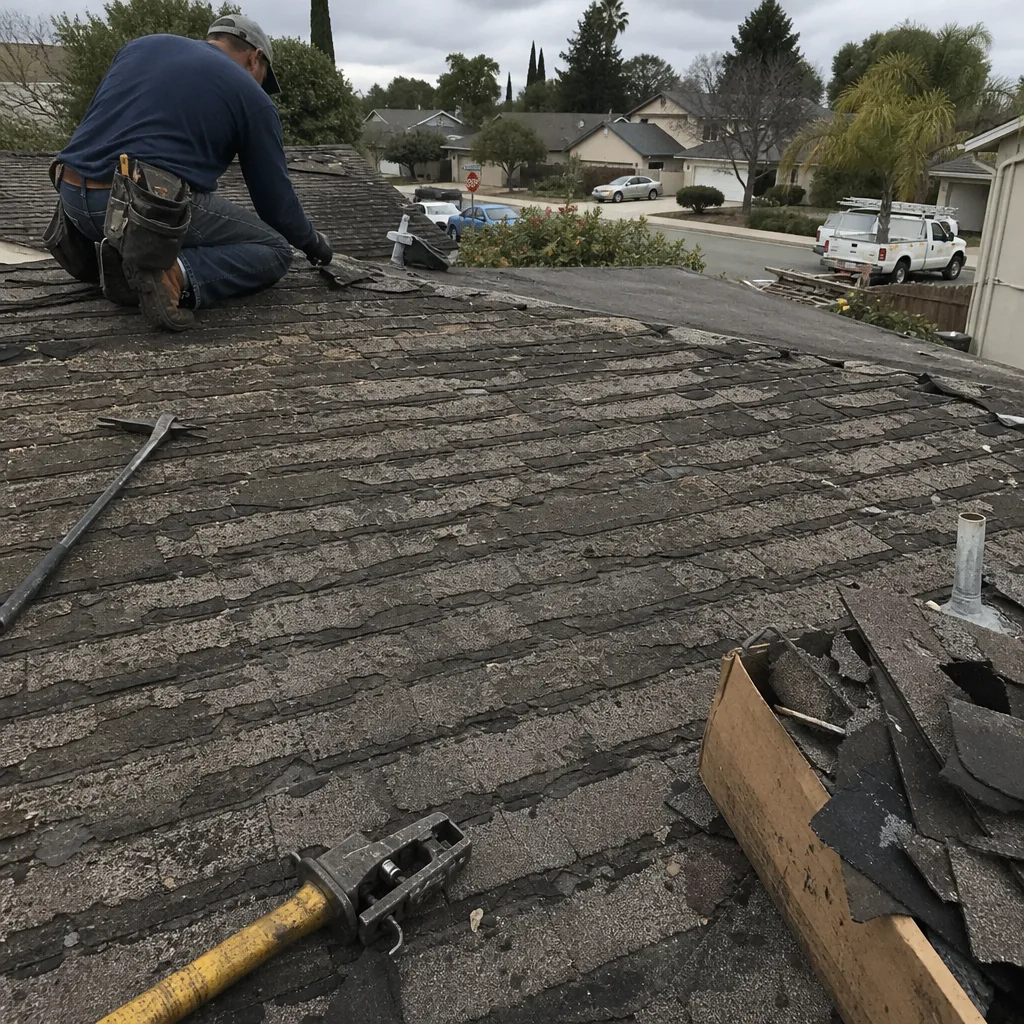 Before
 After
 Before
 After
 Before
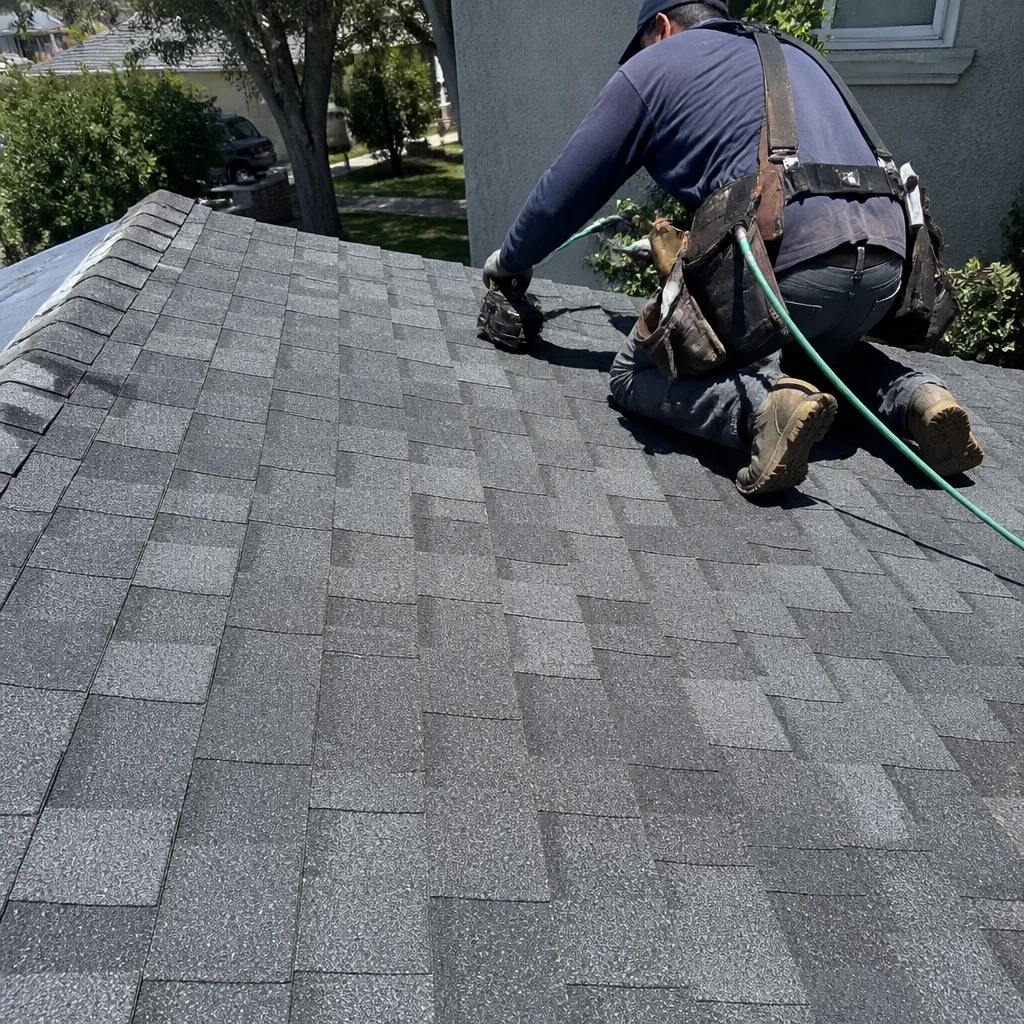 After
When to Call a Professional
Some situations are beyond safe DIY response, and the honest guidance is to call a professional immediately. Active water intrusion through the ceiling requires emergency response: every hour of delay adds secondary water damage to insulation, drywall, and framing. Any roof damage involving structural movement, visible sagging, or a large puncture from a tree limb requires professional assessment before anyone walks on the roof surface. Steep-slope roofs, tile roofs, and any roof accessed from a second-story eave line are not DIY territory, even for tarping. If your roof has sustained damage during a Santa Ana event or El Niño rain system and you’re not certain of the roof’s structural integrity, call rather than climb. Spartan Roof Repair offers free estimates in Costa Mesa. Call (855) 382-3237 for a straight answer about your roof, whether that’s advice on whether tarping is needed, or scheduling a full repair. We inspect it, we repair it, we replace it.
Frequently Asked Questions
Emergency roof repair in Costa Mesa typically ranges from $450 to $1,800 for common storm damage like peeled shingles, flashing failures, or small puncture repairs. The emergency premium, meaning the additional cost over non-emergency repair, runs 20% to 40% depending on demand. Emergency tarping alone often runs $350 to $750. A full roof replacement after major storm damage runs $12,000 to $28,000 depending on roof size and material selection. For an exact quote on your specific damage, call (855) 382-3237. Estimates are free.
Most standard homeowner’s insurance policies in California cover wind damage as a named peril, which means Santa Ana wind damage is typically covered. However, coverage depends on the roof’s pre-storm condition. If the adjuster determines the roof was already failing due to age or deferred maintenance, the claim may be denied or partially covered. This is why pre-storm documentation and proactive maintenance matter. Check your specific policy or call your agent to confirm wind coverage limits before storm season starts.
Emergency tarping and stabilization typically takes 1 to 2 hours once a crew arrives. Permanent repair of common storm damage, like a section of peeled shingles or a flashing replacement, typically takes 3 to 6 hours. Larger repairs that require deck replacement or structural work extend to multiple days. The variable isn’t the repair time itself; it’s how long you wait for a crew to become available during high-demand storm periods. Pre-qualified homeowners who call immediately after damage are first in line.
Emergency roof repairs that replace a small section of shingles or flashing generally don’t require a permit under Costa Mesa’s building code. However, any repair that involves structural deck replacement or changes to the roof’s load path may require a building permit. A full roof replacement in Costa Mesa requires a permit regardless of whether it’s emergency-related. Your roofing contractor should know exactly which scope triggers permit requirements and should handle the permitting process for you.
Wind-rated asphalt shingles from manufacturers like GAF and Atlas, with ratings of 110 mph or higher, perform well in Santa Ana conditions. For flat and low-slope sections common on Costa Mesa mid-century homes, Boral’s composite slate and tile systems offer strong water resistance under sustained El Niño rain. The best material choice depends on your specific roof geometry, existing structure, and budget. We install and service seven of the industry’s most trusted roofing brands, including GAF, Atlas, Tamko, and Boral, so material recommendations are based on your roof’s actual needs rather than what we happen to stock.
If no water is actively entering your home and no rain is forecast within the next 48 hours, your repair can generally wait until the storm cycle passes. The key indicator is active water intrusion: if water is coming through the ceiling or pooling inside, that’s same-day emergency territory. If the damage is visible but the interior is dry and the forecast is clear, you have a short window to schedule the repair at normal pricing. When in doubt, call (855) 382-3237 and describe what you’re seeing. We’ll tell you honestly whether it’s an emergency or whether it can wait.
The Bottom Line
Roofing emergencies in Costa Mesa are almost never the sudden, unpredictable events they feel like. They’re the delayed consequence of decisions made months earlier: the inspection that was skipped, the minor repair that was deferred, the contractor who was never pre-qualified. The solution isn’t better crisis management. It’s better preparation. Pre-position your contractor relationship before you need it. Complete the 48-hour pre-storm checklist when watches are issued. Document damage in the right order before you call insurance. Know the difference between same-day emergencies and 48-hour urgency. And when the storm passes, follow through with a permanent repair from a roofing specialist who focuses on one trade and does it well. Call Spartan Roof Repair at (855) 382-3237 for free estimates on inspection, repair, or full replacement. A straight answer about your roof, before or after the storm.
Written by the team at Spartan Roof Repair, serving Costa Mesa since 2017.