
Last updated October 31, 2026
 Architectural shingles
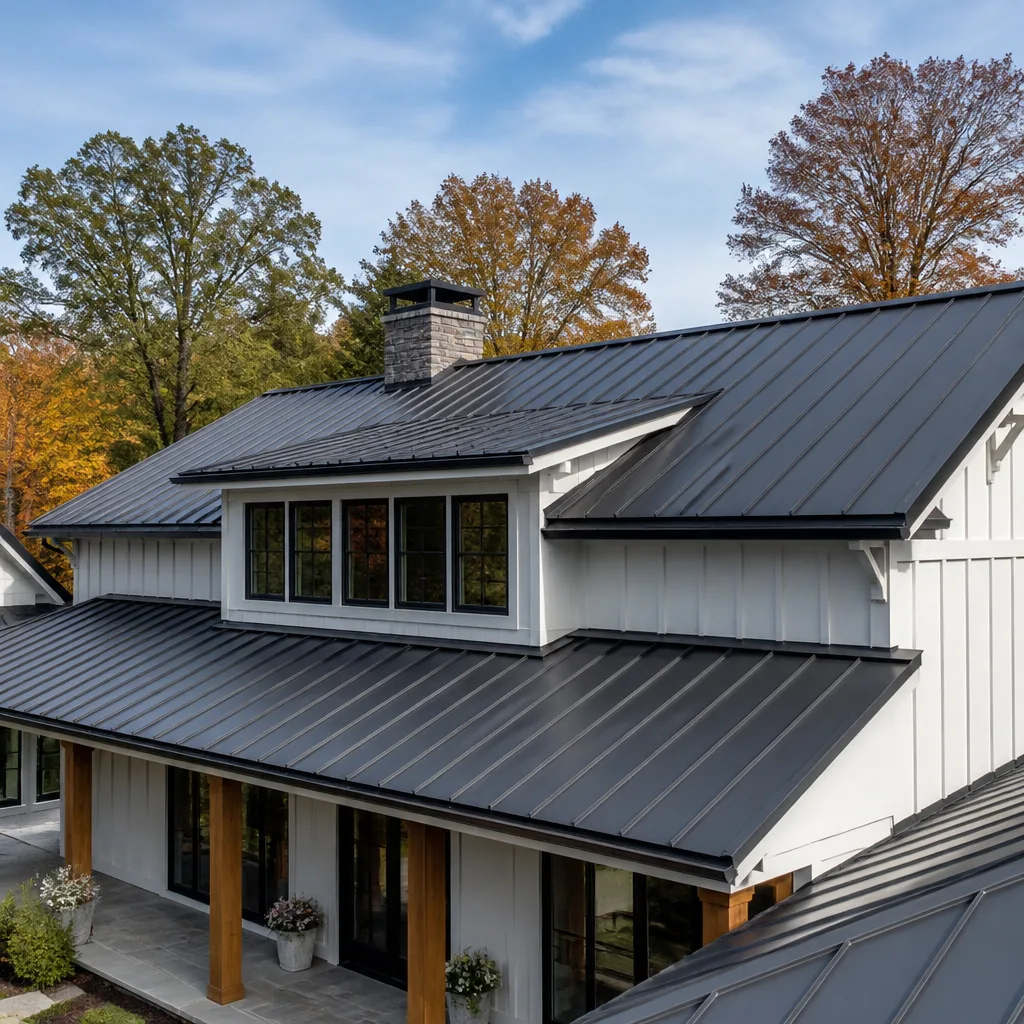 Metal roofing
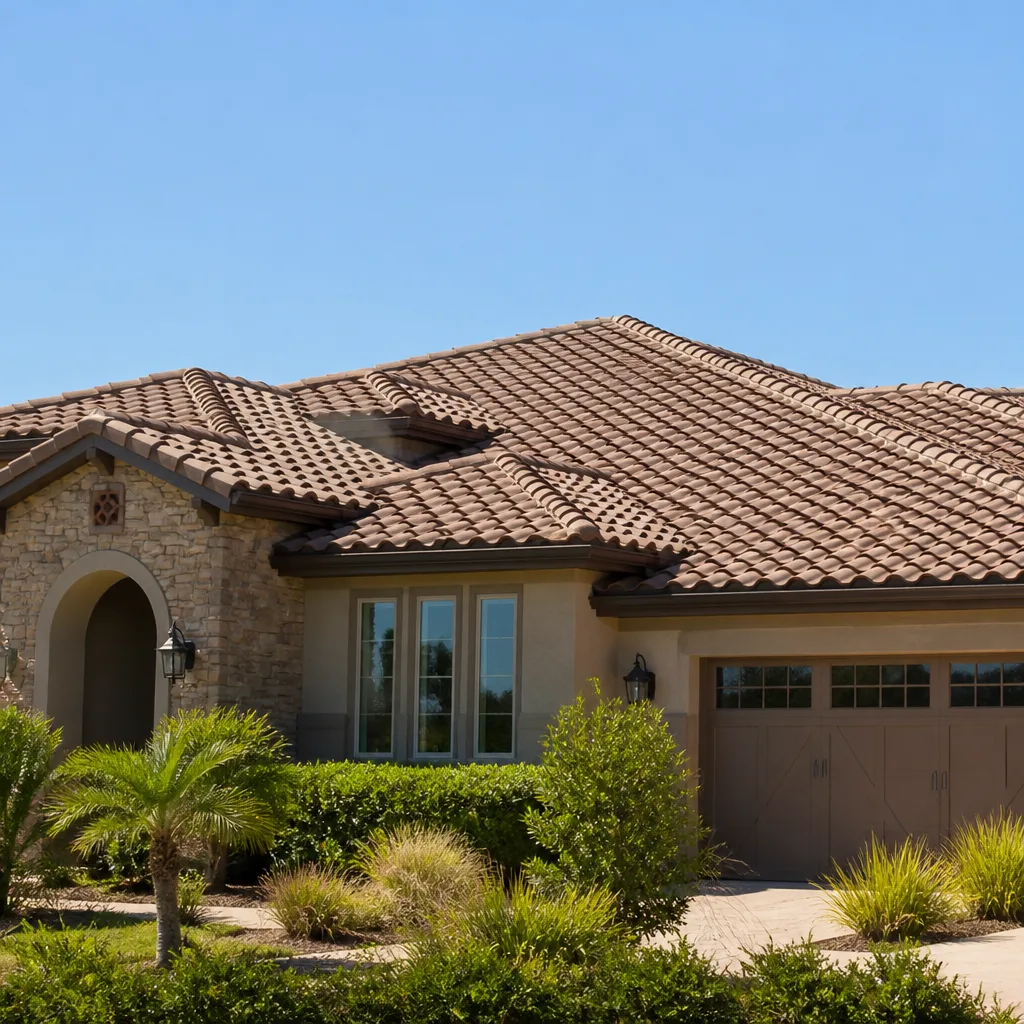 Tile roofing
 GAF
 Owens Corning
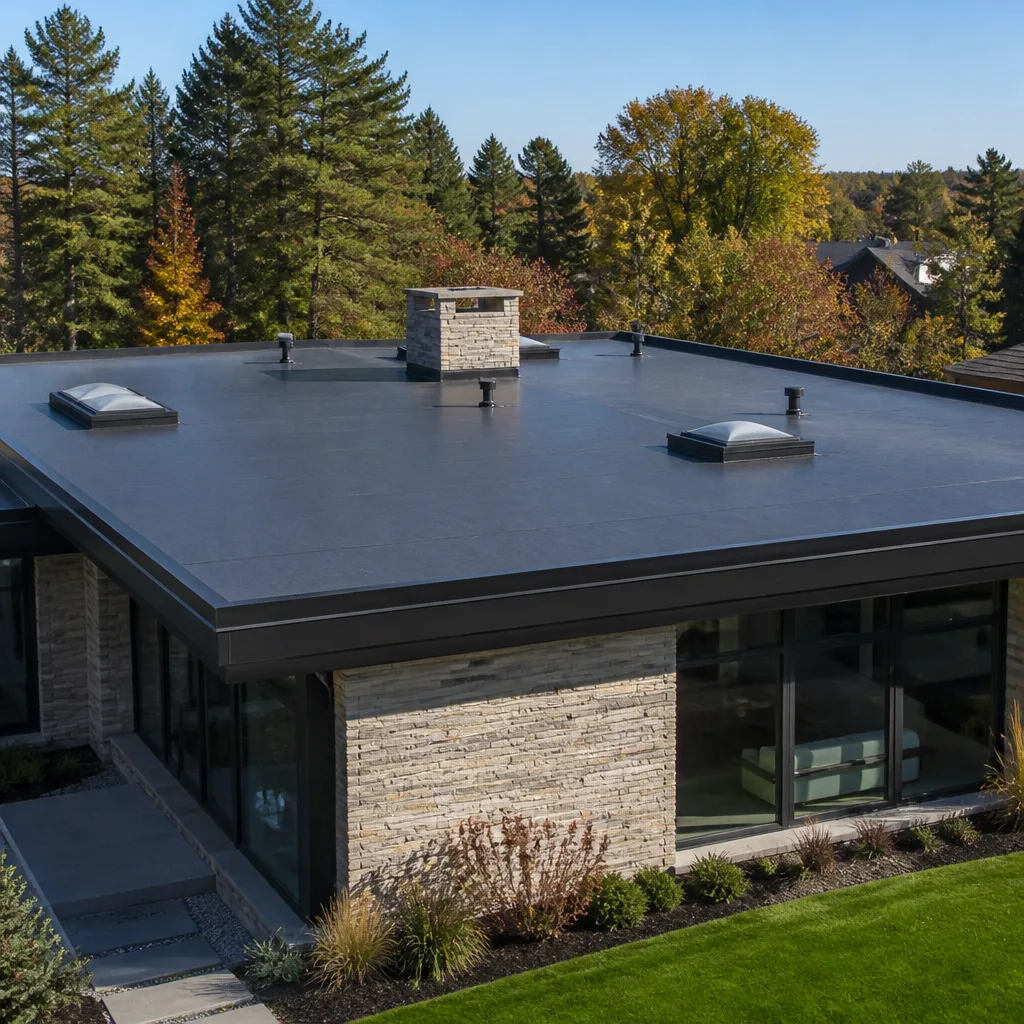 Flat & low-slope
Free roof inspection with deck photos before we talk money - GAF and Owens Corning certified installation
The Complete Roof Repair Guide for Costa Mesa Homeowners
Most roof repair guides are written for Atlanta or Phoenix. Costa Mesa homeowners deal with something neither of those cities has: a marine layer that sits on your roof for 200+ nights a year, silently degrading sealants, flashings, and granule adhesion in ways that don’t show up until you have a ceiling stain. This guide covers the failure patterns specific to Costa Mesa roofs, how to assess damage without climbing on a ladder, what repairs actually cost in this market, and when patching stops making sense. You’ll finish with a clear decision framework and a documented record for any insurance conversation.
Quick Answer
Roof repair in Costa Mesa typically costs between $450 and $1,850, depending on whether you’re fixing a single flashing point, a few cracked tiles, or a section of underlayment. The most common repairs in this city are roof-to-wall flashing failures, tile re-setting after Santa Ana winds, and sealant degradation around vents and chimneys caused by persistent marine layer moisture. Most roofs under 15 years old are worth repairing; roofs past 20 years with multiple active leaks usually warrant replacement rather than repeated patching. Roof repair in Costa Mesa works best when you act on the first visible sign instead of waiting for the second one.
Styles & brands we work with
Table of Contents
- Why Costa Mesa’s Climate Causes Roof Failures Other Cities Never See
- What Roof Repairs Cost in Costa Mesa: A Line-Item Breakdown
- Repair vs. Replace: The 15-Year Framework
- Costa Mesa Permits for Roof Repairs: When a Permit Actually Protects You
- A Seasonal Inspection Calendar Built Around Costa Mesa Weather
- How to Document Roof Damage for Insurance Claims in Orange County
- Material Choice in a Salt-Air Environment: What Holds Up, What Doesn’t
- Common Mistakes to Avoid
- When to Call a Professional
- Frequently Asked Questions
Why Costa Mesa’s Climate Causes Roof Failures Other Cities Never See
Costa Mesa sits in a narrow coastal band where three forces converge on your roof. First, the marine layer rolls in most evenings from late spring through early fall, depositing moisture that lingers for 10 to 14 hours at a stretch. Second, salt aerosols from the Pacific travel inland with that moisture, settling invisibly on roof surfaces. Third, Santa Ana winds arrive from the northeast between September and January, blasting roofs at 40 to 60 mph with gusts that have exceeded 70 mph in the Newport-Mesa corridor.
Each of these forces alone is manageable. Together, they create a compounding failure pattern.
Salt accelerates corrosion on metal flashings, pipe collars, and vent bases. What takes 20 years to rust in Riverside happens in 12 to 15 years in Costa Mesa. The marine layer keeps underlayment damp for a third of the year, which means that small sealant cracks around vents and skylights never get the dry-out period that inland roofs enjoy. And Santa Ana winds exploit every weakened seal, lifting tiles, yanking ridge caps, and pulling shingles that looked secure a week earlier.
In our experience, the repair calls we get after a Santa Ana event in Costa Mesa neighborhoods like Mesa Verde, College Park, and the Eastside fall into a familiar pattern: tile displacement near roof edges, ridge cap loss, and debris-driven punctures. The calls we get after a heavy marine layer season are different: slow leaks inside walls, staining around chimneys, and musty attic smells that homeowners initially attribute to something else.
The takeaway is simple. In Costa Mesa, you don’t wait for a visible roof leak to act. You look for the precursor conditions that this specific climate produces, and you address them before water finds its way inside.
What Roof Repairs Cost in Costa Mesa: A Line-Item Breakdown
Roof repair pricing in Costa Mesa runs higher than Riverside or San Bernardino, but slightly lower than Newport Beach or Laguna Beach. Labor rates in Orange County’s coastal market are elevated, and the permitting environment is tighter than inland. But you’re also paying for contractors who understand marine-layer degradation, which is a real expertise difference.
Here are the cost ranges we see consistently in this market, based on the type of repair:
- Flashing replacement (roof-wall, chimney, skylight): $450 to $950 per flashing point
- Pipe collar or vent boot replacement: $250 to $500 each
- Concrete tile re-setting (3 to 10 tiles): $350 to $850 per section
- Ridge cap re-bedding or replacement: $600 to $1,400 per 20 linear feet
- Underlayment patch under tile (2 to 4 square feet): $750 to $1,500
- Whole-valley reconstruction: $1,200 to $2,600
- Dry rot decking repair (per section): $500 to $1,100
- Sealant maintenance (exposed fasteners, vent bases, terminations): $300 to $700 per visit
For asphalt shingle roofs, which are less common in Costa Mesa but still present in certain tracts and on ADUs, expect to pay $4.50 to $7.00 per square foot for repair work that goes beyond surface patching.
If you call three contractors in Costa Mesa and get quotes that vary by more than 40%, ask for a written line-item explanation. A $500 difference on a flashing repair is usually explainable. A $2,000 difference on the same line item usually isn’t. At Spartan Roof Repair, we give written line-item scopes for every repair. You know what you’re paying for before anyone touches the roof. Call (855) 382-3237 to schedule a free estimate if you want this level of clarity.
Repair vs. Replace: The 15-Year Framework
Here’s the decision framework we walk Costa Mesa homeowners through when they ask whether to patch or replace. The logic applies regardless of whether your roof is concrete tile, clay tile, asphalt shingle, or standing seam.
Roofs under 15 years old: In almost every case, repair is the right call. The underlayment has enough life left that localized fixes make financial sense. A flashing failure at year 9 doesn’t mean the whole system is compromised. Fix the weak point, reseal the surrounding area, and you typically get several more good years. A roof inspection in Costa Mesa before you spend patch money confirms that the failure is isolated rather than systemic.
Roofs 15 to 20 years old: This is the gray zone. The decision should hinge on what the inspection finds. If you have one isolated flashing failure and the rest of the roof checks out, repair it. If you have three separate active issues, or the underlayment is showing its age in multiple spots, or the granules on your shingles are visibly thin across entire slopes, you’re at the replacement discussion. At this age, repeated repairs often cost more per year of remaining life than a full roof replacement in Costa Mesa would.
Roofs past 20 years: Unless the roof was replaced with premium material after its original installation, you’re on borrowed time. Underlayment has a finite lifespan. In Costa Mesa’s marine-layer climate, that lifespan is shorter than manufacturer warranties suggest because the moisture exposure never takes a break. When a 22-year-old roof leaks, the right question is rarely “what’s the cheapest patch?” It’s “what’s the replacement plan, and what can we do to protect the house between now and then?”
One more factor worth naming: if your roof has sustained repeated Santa Ana damage, each re-setting of tiles weakens the attachment system slightly. After three or four wind events have torn sections of the roof up, the cost of repeated repairs approaches the cost of a new roof with modern, wind-rated attachment hardware. At that point, replacement starts looking less like an expense and more like the end of a recurring problem.
Costa Mesa Permits for Roof Repairs: When a Permit Actually Protects You
Costa Mesa, like most Orange County cities, enforces California Building Codes through its building department. The practical distinction for roofing work is this:
Repairs that generally don’t require a permit:
- Replacing individual tiles or shingles
- Resetting displaced tiles
- Replacing a pipe collar or vent boot
- Sealant application around flashings and terminations
- Small flashing repairs that don’t involve structural alteration
Work that does require a permit in Costa Mesa:
- Replacement of more than an isolated portion of the roof (typically defined as more than 25% of the roof area within a 12-month period, though the city’s enforcement threshold is 50% for re-roofing under most interpretations)
- Full roof replacement
- Any structural repair to decking or framing beyond surface replacement
- Work that changes the roof’s fire rating or assembly
Here’s where the permit protects you. If you hire a contractor who replaces a large section of roof without pulling a permit, the work is not in the city’s record. When you sell the house, the buyer’s inspector will flag any work that appears unpermitted, and you’ll either have to retrofit the permit (which is painful and expensive) or negotiate a price reduction. A proper contractor pulls permits when they’re required and includes the cost in the quote. At Spartan, we handle permits on every job that needs one. There’s no gray area and no shortcut.
Costa Mesa also has a local fire ordinance interpretation worth knowing: the city is in a Wildland-Urban Interface adjacent zone, which means certain roof materials and assemblies must meet fire-resistance standards. If you’re repairing or replacing sections, make sure the material meets the current rating for your zone. A reputable contractor will know this. A handyman with a nail gun probably won’t.
A Seasonal Inspection Calendar Built Around Costa Mesa Weather
Most generic inspection advice says “have your roof inspected twice a year.” That’s fine, but it misses what Costa Mesa’s specific weather is doing at different times. Here’s the calendar that actually aligns with the failure patterns in this city.
September (pre-Santa Ana): This is the most important inspection of the year. Before the winds arrive, walk your property and look for loose ridge caps, tiles that have shifted, and any tree branches within 6 feet of the roofline. Santa Ana winds turn small problems into big ones overnight. In Costa Mesa’s older tree-lined streets in neighborhoods like College Park and Eastside Costa Mesa, overhanging eucalyptus and pine are the prime movers of wind damage.
November to January (Santa Ana season): After each significant wind event, do a ground-level visual check. Look for displaced tiles, especially along the rake edges and ridges. Check the ground around your home’s perimeter for tile fragments or roofing fasteners. If you see anything, schedule a repair before the next event, not after.
February (post-El Niño rain checks): Costa Mesa gets most of its meaningful rainfall between December and March. After a heavy rain sequence, check your attic and the interior side of exterior walls for moisture. In many cases, a slow leak from a failed flashing shows up as a faint stain or a musty smell weeks before you see an actual droplet. If the marine layer has been unusually persistent that season, check around the chimney and any roof penetrations especially carefully.
May to August (marine layer season): This is when sealants quietly fail. The daily cycle of moisture deposition and drying stresses flexible sealants more than most homeowners realize. Have a professional inspect exposed sealant at vent bases, pipe collars, skylight terminations, and any roof-to-wall joins. Catch the sealant failure now, and you skip the leak that shows up later.
After any significant rain event, anytime: Check the ceiling of any room that sits directly below a valley or a roof penetration. A stain that appears within 48 hours of rain is a reliable diagnostic signal. A stain that appears independent of rain suggests a condensation problem, which in coastal Costa Mesa is a different issue entirely.
How to Document Roof Damage for Insurance Claims in Orange County
Insurance claims for roof damage fail for one simple reason most of the time: the documentation doesn’t tell a clear story. Adjusters don’t see your roof; they see your photos and your contractor’s written report. What you document before anyone touches the roof determines the entire claim.
Here’s the process we recommend to Costa Mesa homeowners:
- Document immediately after the damaging event. If Santa Ana winds tore tiles off at 3 a.m., take photos at 8 a.m. the same morning. The roof should be untouched in these photos. Insurance adjusters look for evidence that the damage is fresh and not a pre-existing condition.
- Shoot wide, medium, and close. Wide shots establish the overall roof condition. Medium shots locate the damage in context of the roof’s features. Close shots show the actual failure point: the broken tile, the torn flashing, the exposed underlayment.
- Include a reference object for scale. A tape measure next to a broken tile or a roof penetration gives the adjuster a size reference. Your cell phone camera is fine, but add the tape measure.
- Photograph from multiple angles. A roof tile that looks fine from one angle may show obvious displacement from another. Move around the property. Use a ladder safely for roof-edge shots if you’re comfortable with that; if not, zoom from the ground and note it in your report.
- Photograph the interior signs of damage too. Ceiling stains, wall discoloration, water marks in the attic. Interior evidence is powerful because it connects the exterior damage to an actual water intrusion event.
- Get a professional inspection before you file. An unbiased written report from a roofing contractor that describes the damage, its likely cause, and the recommended scope of repair is the strongest supporting document you can submit. If you work with Spartan, we provide this report as part of the free estimate process.
- Document any temporary mitigation you do. If you have to tarp a section of roof to prevent further damage, photograph the tarp and keep the receipt. Insurance policies typically require you to mitigate additional damage, and they reimburse reasonable mitigation costs.
One more Orange County-specific note: many Costa Mesa homes are in neighborhoods where roofs are visible from the street without any obstruction. Take advantage of that. A clean street-level photo of your roof taken before any damage occurs is valuable baseline documentation. You can’t always predict when you’ll need it, but when a limb comes through the roof, you’ll be glad you have a “before” photo.
Material Choice in a Salt-Air Environment: What Holds Up, What Doesn’t
Not all roofing materials are equal under Costa Mesa’s specific conditions. If you’re repairing or replacing any section of your roof, material choice determines how long that repair lasts.
Concrete tile: The dominant material in Costa Mesa and the most common roofing type we service. Concrete tile handles salt air well because it’s mineral-based and doesn’t corrode. The weakness in a concrete tile roof isn’t the tile itself; it’s the underlayment and the flashings beneath. In salt-heavy marine air, metal flashings need to be a corrosion-resistant grade. Galvanized steel works, but aluminum and stainless steel hold up noticeably longer in this specific environment.
Clay tile: Also present in many Costa Mesa neighborhoods, clay tile shares the same structural profile as concrete tile. It’s inert against salt, but it’s more brittle and more vulnerable to impact damage from flying debris during Santa Ana events. Repair costs run slightly higher due to material pricing.
Asphalt shingles: Less common as the primary roofing material in Costa Mesa but present on ADUs, some mid-century tracts, and as repair patches on older homes. Shingles depend on granule adhesion for protection, and the marine layer’s persistent moisture is hard on the adhesive bond. If you have an asphalt shingle roof in Costa Mesa, inspect for granule loss more aggressively than you would inland.
Metal roofing: Standing seam and other metal systems perform well in salt air if the material is right. The key is the alloy: coated steel holds up, bare steel doesn’t, and aluminum is the premium choice for coastal corrosion resistance. If you’re considering metal for a Costa Mesa roof, ask about the specific corrosion-testing standards for the product, not just the color swatch.
At Spartan, we work with materials from manufacturers including Boral, GAF, CertainTeed, and Owens Corning, which means material choice is a conversation about what performs best on your specific roof, not a take-it-or-leave-it proposition. Some of these manufacturers offer enhanced-warranty products in coastal applications, and when we recommend a specific material, it’s because that material matches the house, the exposure, and the budget, not because it’s what we happen to have in the warehouse.
Common Mistakes to Avoid
- Ignoring a small leak because it’s “just a small leak.” In a marine-layer climate, moisture never fully dries. A small leak in an underlayment becomes a large decking rot problem faster in Costa Mesa than it would in Temecula. The repair doubles or triples in cost when rot reaches the structural deck.
- Re-sealing over failed sealant instead of removing it. Applying new sealant over old, cracked sealant might look like a fix. It isn’t. The new sealant bonds to a failing surface and the whole assembly fails within months. Proper repair removes the old material first.
- Hiring a generalist handyman for roof repair. A handyman may be fine for a gutter or a fence post. Roof repair is not the same thing. The stakes are higher, the code requirements are real, and the consequences of a bad patch are visible from inside your ceiling.
- Waiting until after the Santa Ana season to address wind damage. Each wind event that hits an already-weakened area widens the damage. A loose tile that could have been re-set for $350 becomes a section replacement after the next event.
- Skipping the permit on a large repair. If the work should have been permitted and it wasn’t, the cost shows up later at sale, not at the time of the repair. Unpermitted roof work is one of the top findings in Costa Mesa home sale inspections.
- Filing an insurance claim without written documentation from a contractor. An adjuster sees your claim one way if it’s just photos from a homeowner. They see it differently when a roofing professional has documented the cause, scope, and appropriate repair in writing. The written report is the difference between a payout and a reduced settlement.
When to Call a Professional
You can spot a loose tile from the ground and you can see a ceiling stain from inside your house. But there are times when professional assessment is the only responsible move. Call a roofing specialist when you see multiple loose or displaced tiles across different sections of the roof, when you have a leak that appears to originate at a flashing point, or when the roof is past 15 years old and you haven’t had a professional inspection in the last three years. If a ceiling stain appears and you can’t trace it to a single obvious source, don’t guess. Water travels through roof assemblies in ways that aren’t intuitive from inside the house.
The Spartan Roof Repair home team handles exactly one trade: roofing. We inspect it, we repair it, we replace it. There’s no handoff to another contractor and no repurposed generalist guessing at the problem. If you live in Costa Mesa and want a straight answer about your roof, call (855) 382-3237 to schedule a free estimate.
Frequently Asked Questions
Most Costa Mesa roof repairs run between $450 and $1,850, with the most common jobs being flashing replacement ($450 to $950 per point) and tile re-setting ($350 to $850 per section). The exact figure depends on the roof’s age, the repair type, and the material involved. Get a written line-item estimate before any work begins so you know exactly where your money goes. Call (855) 382-3237 for a free estimate based on your actual roof, not a national average.
Yes, and it does it slowly. The marine layer’s persistent moisture means that sealants around vents, pipes, and flashings stay damp for 10 to 14 hours a day during the summer months. Moisture that never fully dries leads to premature sealant failure and underlayment degradation. This is one of the primary reasons Costa Mesa roofs underperform their manufacturer-warranted lifespan compared to inland installations.
For isolated repairs like replacing a few tiles, fixing a pipe collar, or touching up sealant, no permit is required. For larger repairs, particularly those involving more than 25% of the roof area, structural decking work, or a material change, the city of Costa Mesa requires a permit. A proper roofing contractor will tell you when a permit applies and handle the application as part of the Roof Repair job.
If your roof is under 15 years old and the problem is isolated to one or two specific points, repair is almost always the right choice. If the roof is past 20 years old and has multiple active issues, replacement is typically more cost-effective than ongoing repairs. In the 15 to 20 year range, you need a professional inspection to make an informed decision. We offer free inspections in Costa Mesa; call (855) 382-3237 to schedule one.
Santa Ana damage typically appears as displaced or broken tiles along roof edges and ridges, missing ridge caps, and debris punctures from tree branches. After any significant wind event, walk your property and check the ground for tile fragments and fasteners, and look at the roofline for visible displacement. Catching wind damage within days prevents the leak that follows the next rain event.
Document everything before anyone touches the roof. Take wide, medium, and close-up photos with a scale reference. Photograph interior evidence like ceiling stains and attic water marks. Then get a written inspection report from a roofing contractor—our How to Hire a Roofing Contractor in Costa Mesa: A Step-by-Step Guide can help you choose—that identifies the cause, scope, and recommended repair. That written report is the strongest supporting document you can submit with an insurance claim in Orange County.
The Bottom Line
Costa Mesa’s roofs fail differently from roofs in Riverside, Phoenix, or Atlanta. The marine layer compounds moisture damage, salt air accelerates corrosion, and Santa Ana winds exploit every weak point the other two forces have created. The answer isn’t to buy more insurance or to wait for the ceiling stain. It’s to inspect on a schedule that matches Costa Mesa’s actual weather patterns, to make repairs when they’re still small, and to choose materials and contractors that understand salt-air degradation. When a repair is the right call, a focused roofing specialist will tell you that. When replacement is the better financial decision, they’ll tell you that too. Either way, you get a straight answer about your roof. Call (855) 382-3237 to put that answer to work.
Written by the team at Spartan Roof Repair, serving Costa Mesa since 2017. Explore more guides & resources.
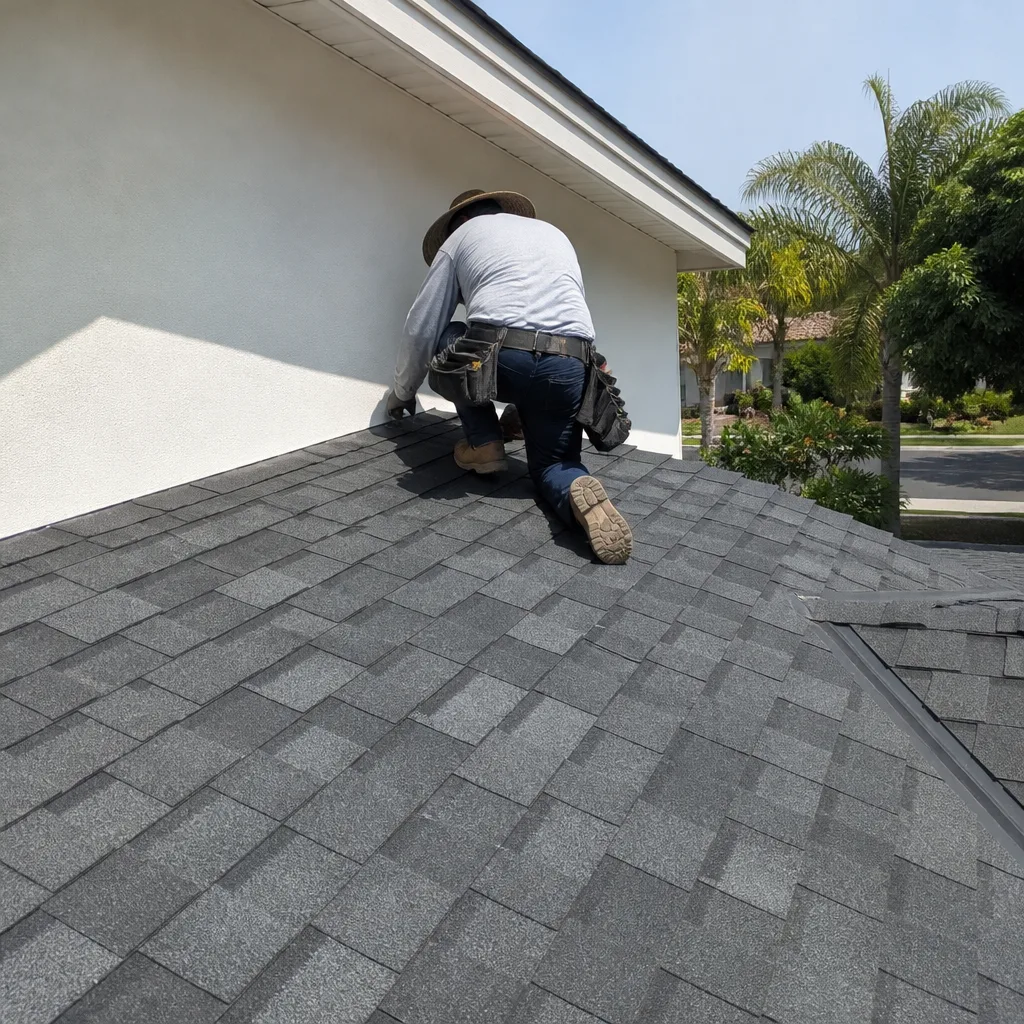
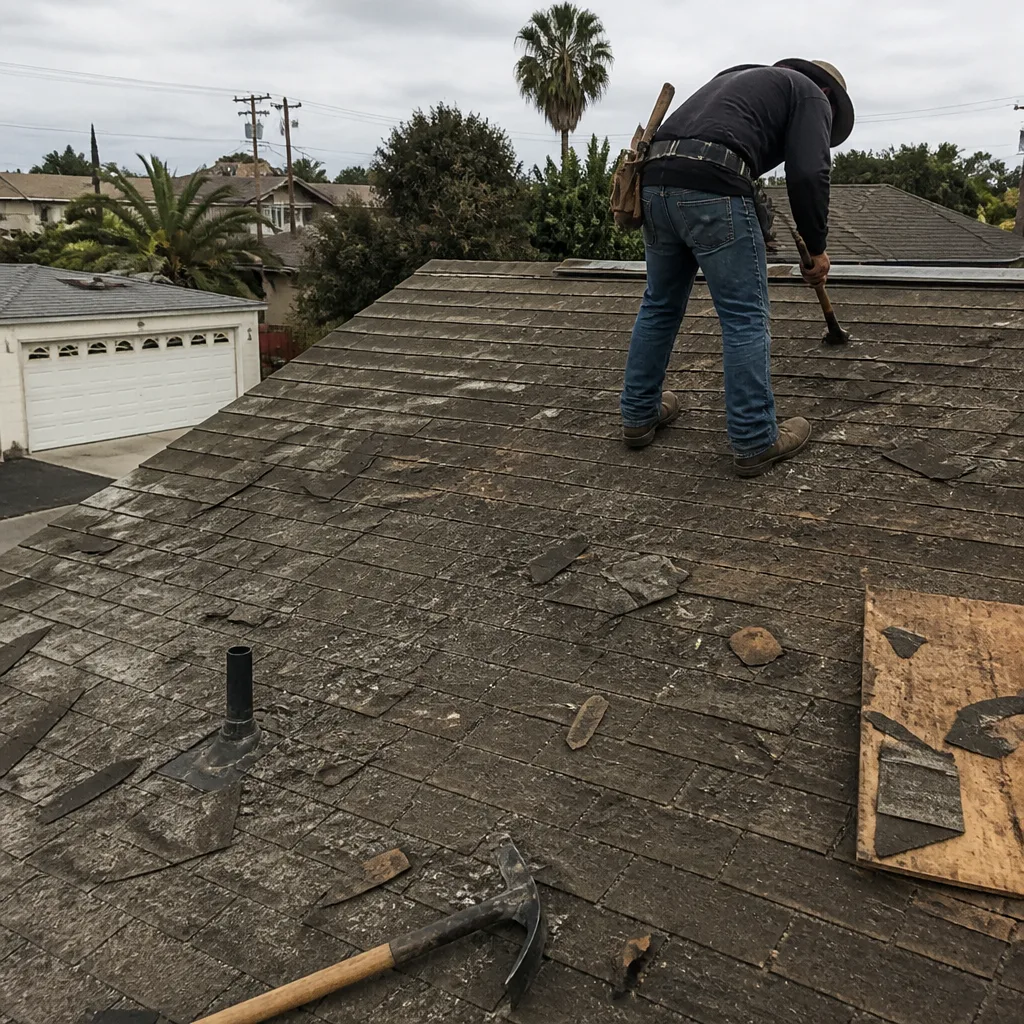
See the difference
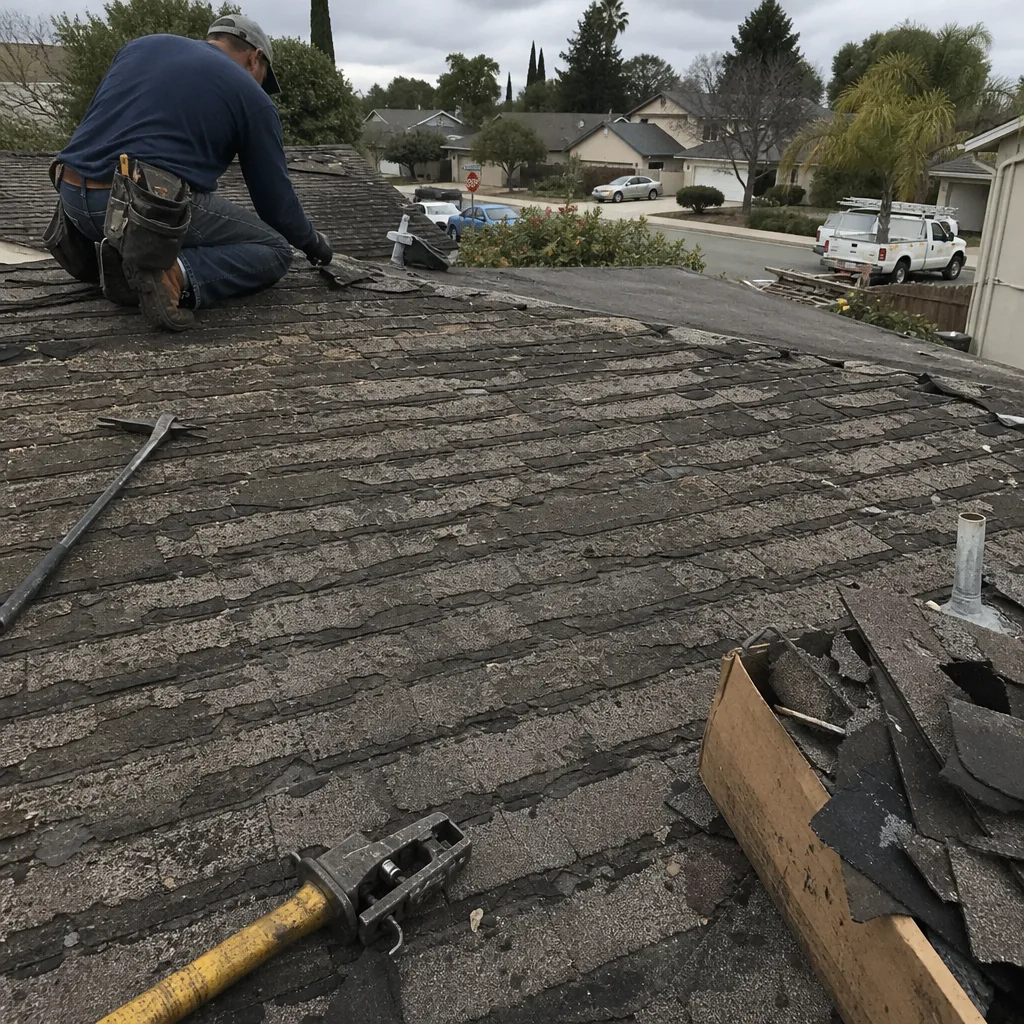 Before
 After
 Before
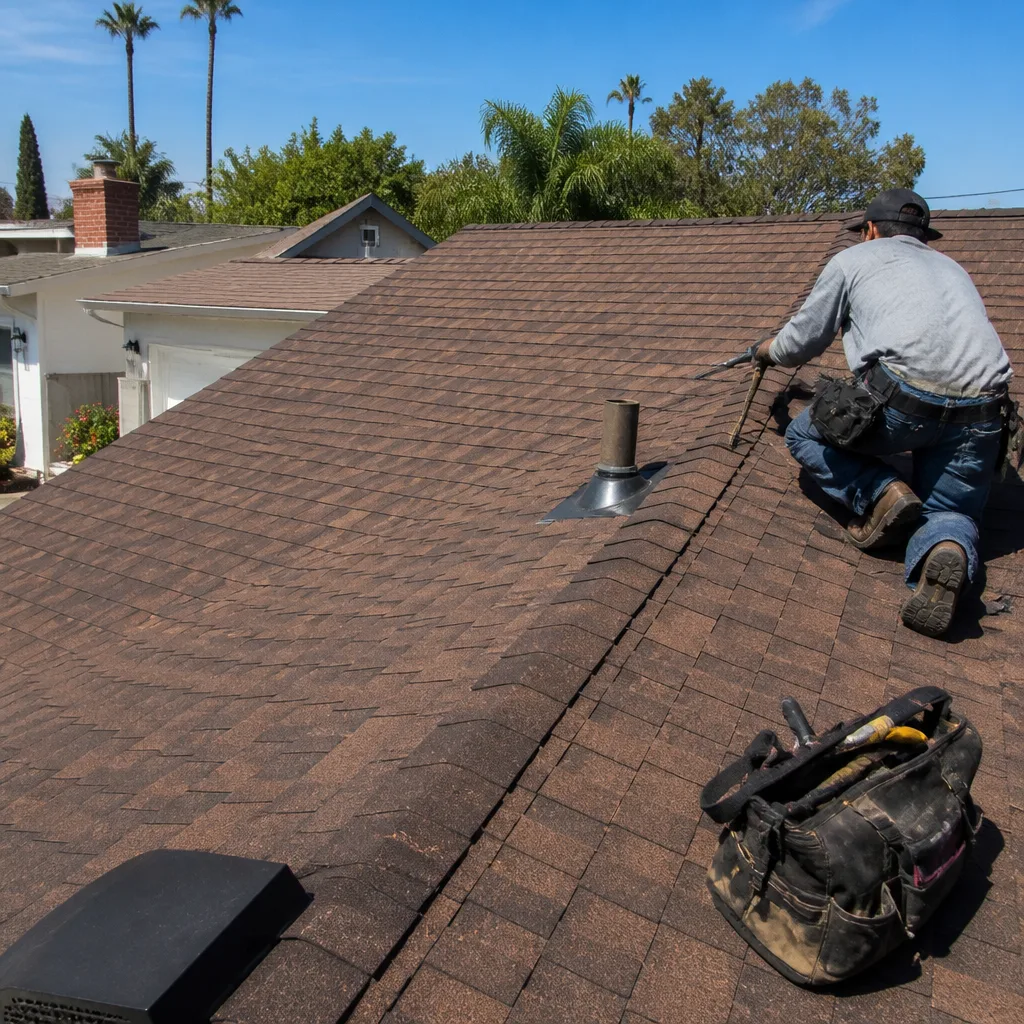 After
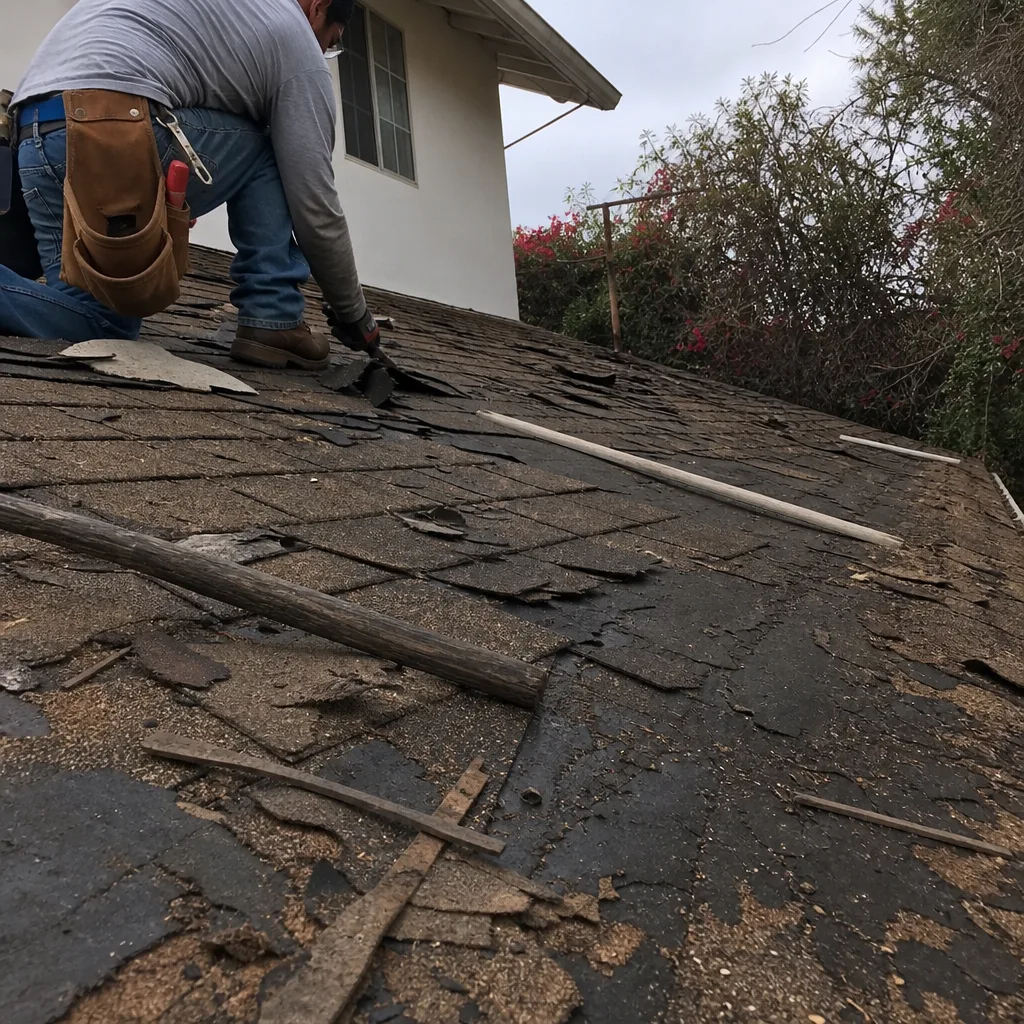 Before
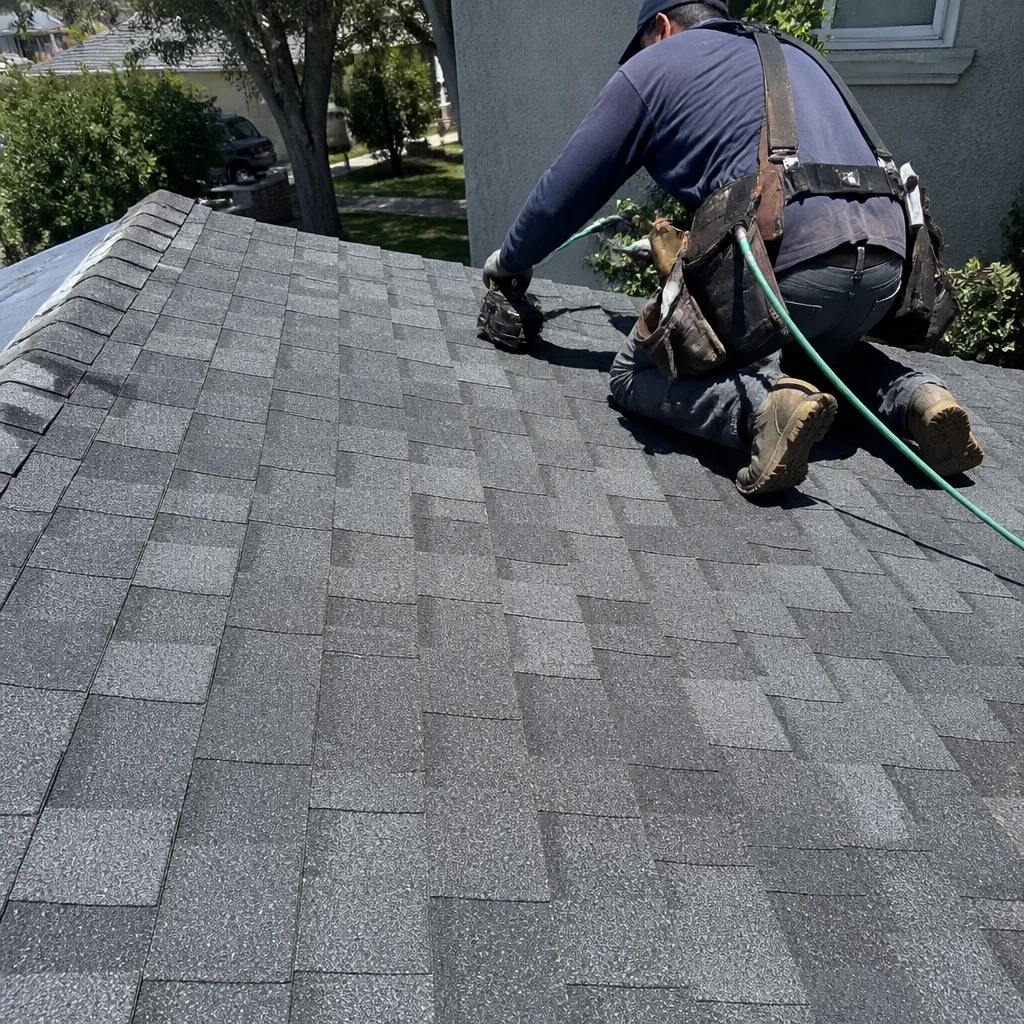 After