
Last updated October 31, 2026
 Architectural shingles
 Metal roofing
 Tile roofing
 GAF
 Owens Corning
 Flat & low-slope
Free roof inspection with deck photos before we talk money - GAF and Owens Corning certified installation
Roof Repair Maintenance Checklist for Costa Mesa Homeowners
The most damaging thing about Costa Mesa’s climate isn’t any single storm. It’s 300-plus days of annual UV radiation and intermittent marine moisture slowly degrading your roof while you assume everything is fine. Homeowners here get lulled into a false sense of security because we don’t get snow, we don’t get ice dams, and we don’t get the dramatic weather that forces people to think about their roofs. Meanwhile, the sun is quietly cooking your underlayment, the salt air is eating at your flashing, and the Santa Ana winds are loosening the things you never look at. This checklist is built for Costa Mesa specifically. You’ll learn what actually fails here, when to look at it, and how to separate cosmetic aging from damage that needs a repair now.
Quick Answer
A proper roof maintenance checklist for Costa Mesa homeowners focuses on UV and heat degradation, salt-air corrosion, and wind-driven debris, not winter weather. You should inspect your roof four times a year, with a fast visual check from the ground monthly, and address granular loss, corroded flashing, and cracked sealant as soon as you notice them. Most Costa Mesa roofs need professional maintenance every two to three years depending on exposure and material.
Styles & brands we work with
Table of Contents
- Why Costa Mesa Roofs Fail Differently
- Month-by-Month Maintenance Calendar
- The UV Damage Check Most Checklists Skip
- Salt-Air Corrosion on Flashing and Vents
- Santa Ana Aftermath: What to Check
- Flat and Low-Slope Roof Maintenance
- Cosmetic Aging vs. Structural Compromise
- Common Mistakes to Avoid
- When to Call a Professional
- Frequently Asked Questions
Why Costa Mesa Roofs Fail Differently
A roofing maintenance checklist written for Minneapolis or Chicago will tell you to clear snow, check for ice dams, and inspect for freeze-thaw cracking. None of that applies to a roof in Costa Mesa. Our failure patterns are slower, quieter, and tied to three things that never show up in a typical national guide.
First, continuous UV exposure. Costa Mesa gets around 280 to 300 sunny days a year depending on the year. That radiation degrades asphalt shingles at a rate that surprises homeowners who moved here from colder regions. The oils in the shingle dry out, the granules loosen, and the mat underneath becomes brittle and prone to cracking. Asphalt shingles rated for 25 to 30 years in a temperate climate often show meaningful wear at the 15-to-20-year mark here. We’ve inspected Costa Mesa roofs with GAF, CertainTeed, Atlas, and Owens Corning shingles that looked closer to end-of-life than their age suggested, purely because of sun exposure.
Second, the marine influence. Costa Mesa sits close enough to the coast that morning marine layers and afternoon ocean breezes are consistent through much of the year. That trapped moisture doesn’t just sit on top of the roof. It works its way into micro-gaps around flashing, vents, and fasteners. When the sun comes out and heats things up, the moisture expands and contracts, gradually loosening sealants and accelerating corrosion on metal components. This cycle is subtle. You won’t see it in a single week. Over two or three years, it’s enough to create real problems.
Third, the Santa Ana winds. They’re a seasonal event with an outsized impact. A single strong Santa Ana event can lift shingle tabs, blow debris against the roof, and fill gutters with dry leaves and dust. After a Santa Ana event, the roof often looks fine from the ground, but small lifts and loosened flashing are already there, waiting for the next rain to become active leaks.
Our team works on roofs across Costa Mesa, and the failure pattern we’ve seen repeatedly is this: a roof that was never leaking suddenly shows a ceiling stain during the first winter rain, and the homeowner thinks the rain caused it. In most cases, the damage happened months earlier during a long run of UV exposure or a Santa Ana wind event. The rain just revealed it. That’s why the maintenance rhythm here matters more than in most climates. In Costa Mesa, the roof isn’t failing because of harsh weather events. It’s failing because of daily, background-level stress that no one checks for.
Month-by-Month Maintenance Calendar
You don’t need to inspect your roof every month. That’s overkill and no one does it anyway. What you do need is a small number of high-value tasks at the right time of year, calibrated to Costa Mesa’s actual seasonal shifts. Here’s the rhythm we recommend to homeowners who ask when they should actually do maintenance.
January through March: Address Winter Rain Damage
Winter is Costa Mesa’s rain season, which means it’s the season when existing roof problems announce themselves. This is a reactive window. Your job here is observation and response, not preventive maintenance.
- After each significant rain, check your ceilings underneath roof valleys and around chimneys, skylights, and vents. Look for water stains, peeling paint, or a faint musty smell.
- Walk your property and look for granules in the gutters and at downspout openings. During and after rain, asphalt shingles shed granules constantly. A small amount is normal aging. A heavy accumulation in one spot can point to a failing section.
- Check the attic if you have access. On a dry day following rain, look at the underside of the roof deck for dark streaks or damp spots, especially around penetrations.
- If you spot anything concerning, call a roofing specialist before the next rain. Water intrusion gets exponentially more expensive the longer it goes unaddressed.
April and May: The Servicing Window
Spring in Costa Mesa is mild and mostly dry. This is the best time for actual roof maintenance work. UV levels are moderate, rain is unlikely, and the roof is accessible. Schedule any Roof Repair that you noticed during the winter, even if it seems minor. A small repair in April beats an emergency in January.
If you have an older asphalt shingle roof, spring is also the right time to have a professional inspect for hidden UV damage before the summer heat accelerates it. We inspect roofs all over Costa Mesa during this window because it gives us the clearest picture of what the last winter did and what the coming summer will do.
June through September: Monitor UV Stress
Costa Mesa summers are dry, often hot, and relentlessly sunny. You won’t get rain damage during this window, but the sun is doing long-term damage. Your job here is to watch for visual signs of heat and UV stress and to avoid doing anything that makes it worse.
- Look for shingles that appear curled at the edges or cracked across their surface. These are UV and heat damage markers that appear first on south-facing and west-facing slopes.
- Check the sealant around pipe boots and vents. Heat causes sealants to dry, shrink, and pull away from the penetration. A separation the width of a pencil lead is enough to let water in during the first rain.
- Avoid walking on the roof during peak heat. Asphalt shingles get soft and pliable in high temperatures, and foot traffic can cause permanent impressions and faster granule loss.
- Watch for dark streaks or patches on the shingle surface. In Costa Mesa, this is often a harmless algae called gloeocapsa magma, which feeds on the limestone filler in shingles. It’s mostly cosmetic on sloped roofs but can become slippery. On some shingle lines it also traps heat and accelerates granule wear. Mention it to your roofer if it’s spreading.
October through December: Prepare for Wind and Rain
October marks the start of Santa Ana season. These winds blow dry, hot air from the desert toward the coast and can gust hard enough to loosen shingles and send debris across roofs in east and central Costa Mesa. November and December bring rain, which turns any loose component into a leak.
- Clear gutters and downspouts before the first major rain. Costa Mesa gutters fill with a mix of leaf litter and fine dust during the dry season. When rain arrives, that mix turns into a paste that blocks downspouts and backs water onto the roof.
- Visually scan the roof from the ground for lifted shingle tabs, especially along edges and at the peak. A lifted tab is a leak waiting for the first heavy rain.
- Check that all roof penetrations are sealed. Look at the pipe boots and roof vents from a ladder if you can do so safely, or have a roofing pro check them.
- If you’ve had a recent inspection that flagged repair items, don’t wait. We see more panicked January calls in Costa Mesa than any other time of year, and most of those leaks trace back to warnings that were deferred in October and November.
The UV Damage Check Most Checklists Skip
Most roof maintenance lists tell you to look for missing shingles. Missing shingles are the last stage of a problem. By the time a shingle is gone, the damage has been progressing for years. The real question for Costa Mesa homeowners is whether the shingles are losing their ability to protect the roof, and that’s a UV-driven process you can see before you ever lose a shingle.
Asphalt shingles have a protective layer of mineral granules that shields the asphalt from direct sunlight. Over time, UV radiation breaks down the bond between the granules and the asphalt. The granules start to shed. You’ll see them in your gutters, at the bottom of downspouts, and on driveways where roof runoff concentrates. Once enough granules are gone, the asphalt beneath is exposed. That asphalt then degrades much faster: it becomes brittle, loses flexibility, and eventually cracks. A cracked shingle lets water through to the underlayment, and the underlayment is the next thing the sun will get to if the crack is large enough.
Here’s the UV-specific inspection sequence that matters in Costa Mesa:
- Look at the shingle surface. A roof that’s losing its UV protection looks bald in spots. You’ll see patches where the granules are thin and the underlying asphalt is visible, especially on south and west exposures.
- Check the edges and curves. Heat and UV combine to curl shingle edges upward. Curled edges mean the shingle has lost flexibility. They also create a lip where wind can catch and lift the shingle.
- Inspect around penetrations. The UV stress on a shingle roof is always worst where the shingle surface is cut or interrupted – vents, pipe boots, skylights, and valleys. The sealant used at these points is also a UV casualty, drying and cracking faster than the surrounding shingles.
- Rub-test a small corner (only if you’re on the roof safely). Gently rub a shingle edge with a gloved thumb. If granules come off easily, the shingle’s UV resistance is failing and the roof needs professional assessment.
If a homeowner in Costa Mesa asks us whether their shingle roof is fine because there are no missing shingles, the answer is usually more complicated than they’d like. Replacement shingle lines from GAF, CertainTeed, Owens Corning, IKO, Atlas, Tamko, and Boral have improved UV-resistant formulations, but no asphalt shingle is immune to 300-plus days a year of direct sun. The maintenance answer isn’t to replace the roof early. It’s to catch the granular loss before it becomes structural failure and, when replacement time comes, to choose a material that fits the exposure your particular roof gets.
For a full picture of how this plays out across your roof’s entire surface, a roof inspection in Costa Mesa is the only way to see what’s happening on the slopes you can’t see from the ground.
Salt-Air Corrosion on Flashing and Vents
Salt doesn’t just sit in the ocean. It gets carried inland by marine air and settles on the metal components of your roof. In Costa Mesa, homes closer to the coast get more of it, but the effect is visible across the entire city. Salt accelerates the corrosion of exposed metal. On a roof, the metal components are flashing, vent pipes, fasteners, and edge flashing at the eaves and rakes.
The failure mode is straightforward. Flashing is the metal material used to make watertight joints where the roof meets a wall, chimney, valley, or penetration. It’s often galvanized steel. Galvanized steel has a zinc coating that protects the underlying steel. Salt air attacks that zinc coating aggressively. Once the zinc is compromised, the steel begins to rust. Rust expands as it forms, which causes the flashing to deform, separate from the roofing material, and eventually crack or detach. When that happens, water gets in.
You can check for salt-air corrosion without getting on the roof. Here’s what to look for from the ground or from a stable ladder:
- White chalky residue on metal surfaces. This is the first visible sign of zinc corrosion. It appears before red rust and often gets mistaken for mineral staining from irrigation or rain. If you see it on flashing or vent collars, the protective coating is failing.
- Orange or brown rust streaks. This is the later stage. Once rust is visible, the metal is actively degrading. Roof flashing in this state typically needs replacement, not repair.
- Dark staining around nail heads and fasteners. Roof fasteners rust out long before the flashing around them. If you see dark streaks running down from nail heads on exposed flashing, those fasteners are failing and loosening.
- Bubbling or peeling paint on any painted metal roof penetration. Salt air gets under paint and accelerates both corrosion and paint failure.
In our experience inspecting Costa Mesa roofs, we find corroded flashing and vent collars on roofs that otherwise look perfectly healthy. The shingles can be mid-life with years left in them, but the flashing is rusted through and needs replacement. That’s a repair, not a roof replacement, and it’s one of the best examples of why annual attention matters. A roofing specialist can replace the flashing while you still have options. Wait until the flashing fails completely, and you’re repairing water damage inside the home too.
Santa Ana Aftermath: What to Check
Santa Ana winds hit Costa Mesa several times between October and January, typically with gusts from the northeast. They’re dry, dusty, and fast enough to move roof debris, lift loose shingles, and strip anything that wasn’t properly fastened. The damage they cause is rarely dramatic. It’s a shingle tab barely lifted, a vent cap shifted, a valley clogged with airborne leaves. But those small changes become leaks when the first steady rain arrives.
After a significant Santa Ana event, do a targeted visual check from the ground:
- Scan the ridge line and edges for lifted tabs. Walk the perimeter of the house and look at the roof’s silhouette. Anything that catches the light differently or appears to stand up from the surrounding shingles needs a closer look.
- Check gutters and downspouts. After a Santa Ana event, Costa Mesa gutters often look different than after rain. After rain, the gutters contain water-saturated debris, usually leaves and old roofing granules. After a Santa Ana event, the gutters contain dry dust, twigs, and anything that blew off nearby trees. Dry debris is easy to ignore because it’s not causing obvious problems, but it clogs downspouts just as effectively when rain comes. Clear it now, not after the first rain exposes the blockage.
- Look at flashing and vents. On ground-level views, check that pipe boots and roof vents are still upright and centered over their penetrations. Wind can shift these even when fasteners hold. A shifted pipe boot lets water run down the pipe and into the attic.
- Check your yard for missing pieces. If you find a shingle in the yard after a wind event, that’s an easy tell. But also look for pieces of metal flashing, vent caps, or chunks of ridge material that likely came from your roof or a neighbor’s. Anything on the ground from the roof means something is open up there.
Santa Ana damage is a perfect example of why Costa Mesa-specific maintenance guidance matters. A generic checklist tells you to check for wind damage after storms. But Santa Ana winds don’t come with rain, so you don’t get the obvious leak to alert you. The damage sits there quietly until November or December rain turns it into an emergency. The maintenance task is almost entirely preemptive: check after the wind, fix before the rain.
If you don’t want to climb a ladder after a wind event, that’s a reasonable position. Ladder work after high wind carries its own risks, and a roofing specialist can assess the roof safely. The point is to have someone look. The damage left unaddressed between October and the first rain is the most expensive kind of avoidable repair we see on homes in Costa Mesa.
Flat and Low-Slope Roof Maintenance
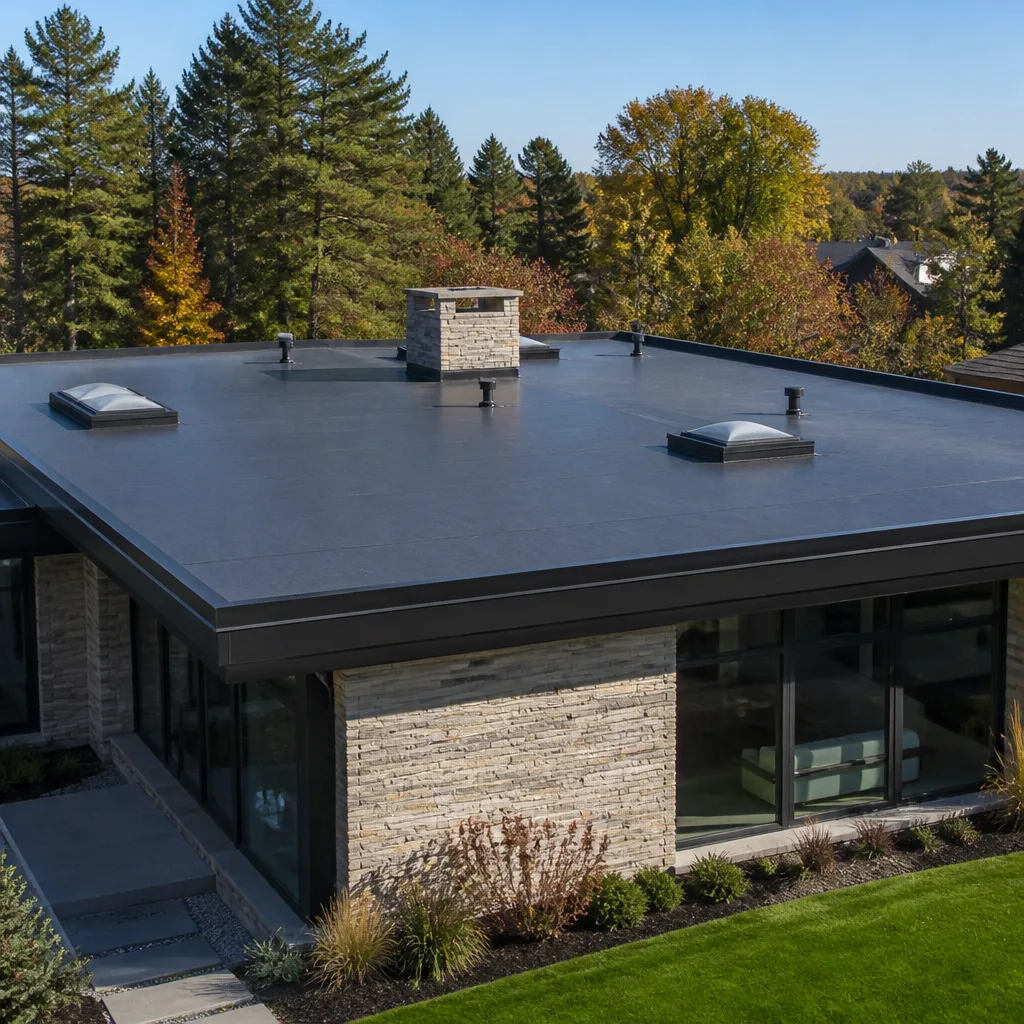
A meaningful portion of Costa Mesa’s housing stock has flat or very low-slope roofs. This is particularly true of mid-century homes built in the 1950s through the 1970s and of many commercial and mixed-use buildings. Flat roofs fail differently than sloped roofs, and a maintenance checklist built around shingles misses them entirely.
On a flat or low-slope roof, water doesn’t run off quickly. It sits there until it evaporates or finds a drain. In Costa Mesa’s dry months, that’s fine. During the winter rain season, it’s a problem if the roof’s drainage system isn’t working. A flat roof that holds water for more than 48 hours after rain is called a ponding roof, and ponding is the most common structural threat on this roof type. The water weight stresses the decking, and the prolonged moisture contact degrades the roofing membrane at a faster rate than the manufacturer intended.
Here’s the flat-roof maintenance sequence that applies to Costa Mesa homes:
- Clear all drains and scuppers. Flat roofs have internal drains, perimeter scuppers, or both. When these block, water ponds, and the membrane soaks for days. Leaves, dust, and broken granules from adjacent sloped sections are the usual culprits. Clear them in October before the rain season and again after any major wind event.
- Check the membrane for cracks and blisters. UV radiation breaks down flat-roof membranes faster than anything else in Costa Mesa. Look for fine cracks in the membrane surface, especially around drains, seams, and roof penetrations. Blisters are bubbles in the membrane caused by trapped moisture or air. Both are entry points for water.
- Inspect the flashing at roof edges and around penetrations. Flat-roof flashing is often a membrane material bonded to metal. The bond between membrane and metal is vulnerable to UV heat cycling and salt air. Look for separation at the transition points.
- Monitor the roof coating. Many flat roofs in Costa Mesa use a reflective coating to reduce heat absorption and protect the membrane from UV damage. That coating wears thin over time. When you can see the membrane showing through, the roof’s UV protection is gone and it’s time to recoat.
Flat-roof maintenance is also the clearest case for professional involvement. The roofing membrane is more fragile than shingles, foot traffic can cause punctures if you don’t know where the roof structure supports weight, and the early-warning signs are subtle. A flat roof can look fine from the ground and be weeks away from leaking. If your Costa Mesa home has a flat or low-slope section, the smartest maintenance move is an annual professional inspection focused on membrane condition, drainage, and scan for UV wear. That annual visit catches problems while they’re still a repair, not a Costa Mesa roof replacement.
Cosmetic Aging vs. Structural Compromise
Not every worrying thing you see on a roof needs repair. Costa Mesa’s climate produces a lot of cosmetic changes that look worse than they are. But the opposite problem is also common: homeowners dismiss early structural failure as “just how the roof looks.” Here’s how to tell the difference.
Cosmetic Issues That Usually Don’t Require Repair
- Dark streaks on shingles. As mentioned earlier, the blue-green algae that thrives on limestone-filled shingles is common in Costa Mesa. On sloped roofs, it’s mostly cosmetic. It can be cleaned with care or left alone if it doesn’t bother you.
- Mild color fading. All shingles lose some vibrancy under our sun. Fading alone doesn’t mean the roof has lost function. Granular retention matters more than color.
- Light surface stains from roof runoff. These often come from rusting fasteners or water that picked up minerals. They look alarming but often point to minor issues, not structural problems. Worth a look but not a panic.
- Small granule deposits in gutters. Asphalt shingles shed some granules through their entire service life. If you see a light, consistent amount, that’s normal aging. If you see heavy, localized deposits, that’s a different story.
Structural Issues That Demand Attention
- Shingles that curl, crack, or lose their granule layer in patches. This isn’t cosmetic. It’s the shingle’s protective system failing. Once the asphalt is exposed directly to UV, the shingle has entered the end of its useful life on that slope.
- Sagging between rafters. A roof line that dips between the rafters means the decking has absorbed moisture and lost structural integrity. This is never cosmetic and never a DIY fix. Roof repair in Costa Mesa for structural sagging is not optional.
- Visible gaps around flashing or penetrations. Any separation that lets you see beneath the flashing is a water entry point. Cosmetic? No. Urgent? Usually yes, because the next rain will use that gap.
- Interior water stains. By the time a stain shows on the ceiling, water has been getting through the roof for a while. The damage may be larger than the stain suggests.
- Mold or musty odor in the attic. A roof that’s trapping moisture in the attic is failing, whether or not water is dripping through the ceiling. This is a ventilation and moisture problem that can accelerate sheathing rot and shingle failure from the underside.
The distinction matters because Costa Mesa’s climate makes cosmetic aging common and structural failure gradual. You’ll see a lot of roofs with algae streaks, fading, and light granule loss. That’s just our environment. But when you see loss of granule coverage, lifting shingles, or any opening around a penetration, the clock is running. In our experience, the homeowners who stay ahead of roofing costs in Costa Mesa are the ones who train themselves to make this distinction early. They don’t overreact to algae and they don’t underreact to curling shingles.
Common Mistakes to Avoid
- Clearing gutters once a year and calling it maintenance. In Costa Mesa, gutters fill with different materials in different seasons: rain-saturated debris in winter, dry dust and dried leaves after Santa Ana events. Clearing annually means at least one season of blocked drainage every year.
- Assuming a roof without leaks is a healthy roof. A roof can be losing granule coverage, corroding at the flashing, and accumulating UV damage for years before the first leak appears. Leak-free is a low standard in our climate. The damage accumulates invisibly.
- Walking on a hot asphalt shingle roof to inspect it. Costa Mesa summers make shingles soft enough to damage with foot traffic. You can compress the granule layer, crack brittle shingles, and create leaks that weren’t there before. Professional inspectors know how to navigate safely; homeowners often don’t.
- Waiting until after the first winter rain to address known repair items. The leak that shows up in December has been developing since at least October. Once rain arrives, roofing crews are booked and the damage keeps spreading while you wait.
- Treating all roof stains as either harmless or lethal without knowing which you’re looking at. Algae streaks are often cosmetic. Rust stains from flashing are not. Granule loss is significant. You need to know the difference, which is exactly what a focused roof inspection provides.
- Replacing a roof without first understanding why the current one failed. If a flat-roof section failed due to ponding from blocked drains, a new roof will fail the same way unless you fix the drainage. A new roof that repeats the old roof’s maintenance-neglected failure pattern is a waste of money. Get the diagnosis before the replacement.
When to Call a Professional
There are maintenance tasks you can handle from the ground or a ladder, and there are situations where calling a professional is the only sensible choice—see our Roof Repair Troubleshooting: Common Problems and How to Fix Them for guidance on what to look for. You should always call a professional when you see interior water stains, sagging roof decking, widespread granule loss on a specific slope, rusted or separated flashing, or any concern about the structural integrity of the roof. The same applies after significant Santa Ana events if you’re not comfortable working at height. Roof work is genuinely dangerous, and the risk isn’t just the fall. It’s the hidden structural weaknesses that make a roof collapse or give way underfoot.
For anything in the ambiguous zone – algae growth that might be more than cosmetic, granule accumulation that seems heavier than it should be, a roof that’s been trouble-free for years but hasn’t been looked at in a decade – a professional inspection settles the question. Spartan Roof Repair offers free estimates in Costa Mesa. We focus exclusively on roofing: inspection, repair, and replacement. No generalist handyman work, no sideline services. We’ll tell you what’s wrong, what’s cosmetic, and what it costs to fix. Call (855) 382-3237 to schedule a look at your roof.
Frequently Asked Questions
Every two to three years is the right inspection interval for most Costa Mesa homes. If your roof is older than 15 years, has a flat or low-slope section, or gets constant sun exposure on a south-facing slope, annual is better. The sun here ages roofs faster than most homeowners expect. Our roof inspection service in Costa Mesa is designed for exactly that purpose, and calling (855) 382-3237 gets it scheduled.
Asphalt shingle roofs in Costa Mesa last roughly 15 to 25 years depending on material quality, orientation, and maintenance history, which is often shorter than the manufacturer’s arbitrary lifespan number. Unshaded south-facing slopes and flat roof membranes take the biggest hit from UV exposure. Call (855) 382-3237 for an honest assessment of what’s realistic for your specific roof.
Algae cleaning looks simple but the execution is where damage happens. Pressure washing strips granules and drives water under shingles, and chemical cleaners can damage the roofing material or the plants below. On most Costa Mesa roofs, algae is cosmetic and can wait until you get professional guidance. For roof repair or replacement where it matters, get a professional recommendation before anyone touches the shingle surface.
The most common maintenance issue we see on Costa Mesa homes is UV-driven granule loss on asphalt shingle roofs, especially on south and west exposures. It’s common because the sun is relentless and the damage is invisible until it’s advanced. The second most common is flashing corrosion from salt air, which rots metal components while the shingles still look healthy.
Yes. Homes closer to the coast get more salt-air exposure, which accelerates corrosion on flashing, vents, and fasteners. The UV exposure is similar across the city, but salt corrosion is more aggressive within a few miles of the ocean. Those homeowners should inspect metal roof components twice a year rather than once.
Preventive maintenance on a straightforward asphalt shingle roof in Costa Mesa typically runs a few hundred dollars, while repair costs vary widely depending on what’s found; check our Roofing Cost Breakdown: The Costa Mesa Homeowner’s Reference for 2026 for detailed pricing. Flashing replacement, sealant work, and minor shingle repair usually stay in the low-to-mid hundreds. The cost of skipping maintenance is the real number to worry about: a small leak left through one rain season can mean thousands in interior damage and structural repairs. Call (855) 382-3237 for a free estimate based on your actual roof.
The Bottom Line
Costa Mesa’s roof threats are slow and easy to miss: UV radiation, salt air, and Santa Ana winds. A maintenance routine built for this climate means checking in four times a year with attention to what each season actually brings, watching for the early signs your roof’s protection is failing, and fixing small things before they become big things. You don’t need to inspect your roof constantly. For more guides & resources, visit our blog. You need to inspect it at the right times, know the difference between cosmetic aging and structural damage, and get professional eyes on it every couple of years. The homeowners who do are the ones who get full value out of their roof and avoid the January emergency calls that every Costa Mesa roofer knows too well.
Written by the team at Spartan Roof Repair, serving Costa Mesa since 2017.
See the difference
 Before
 After
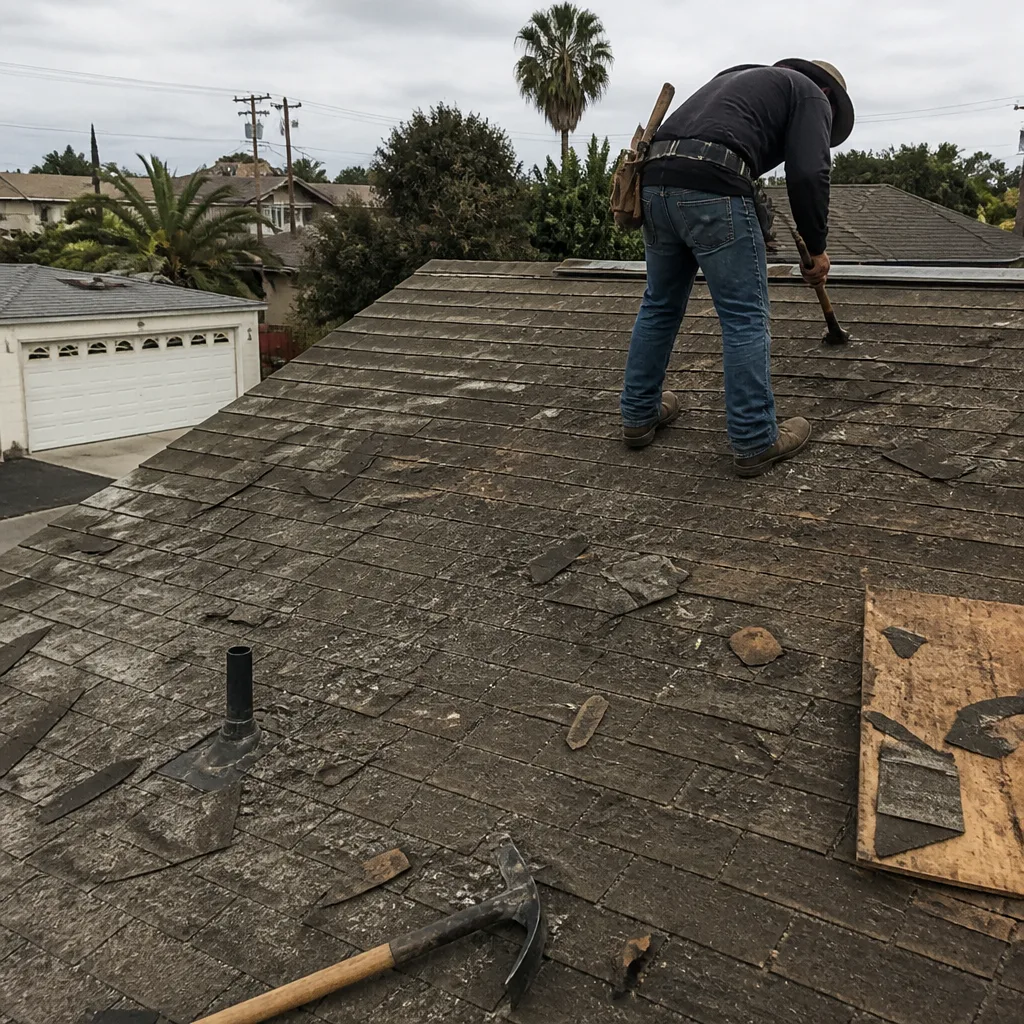 Before
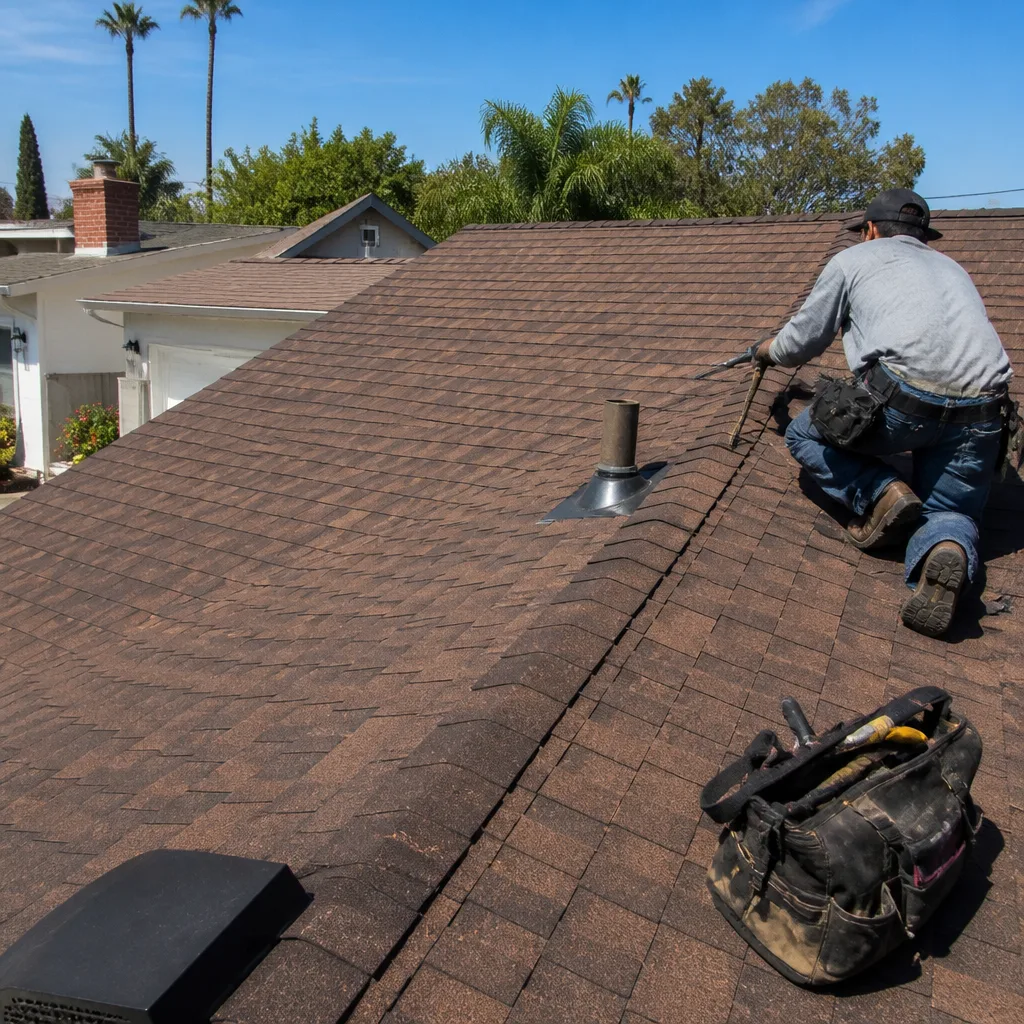 After
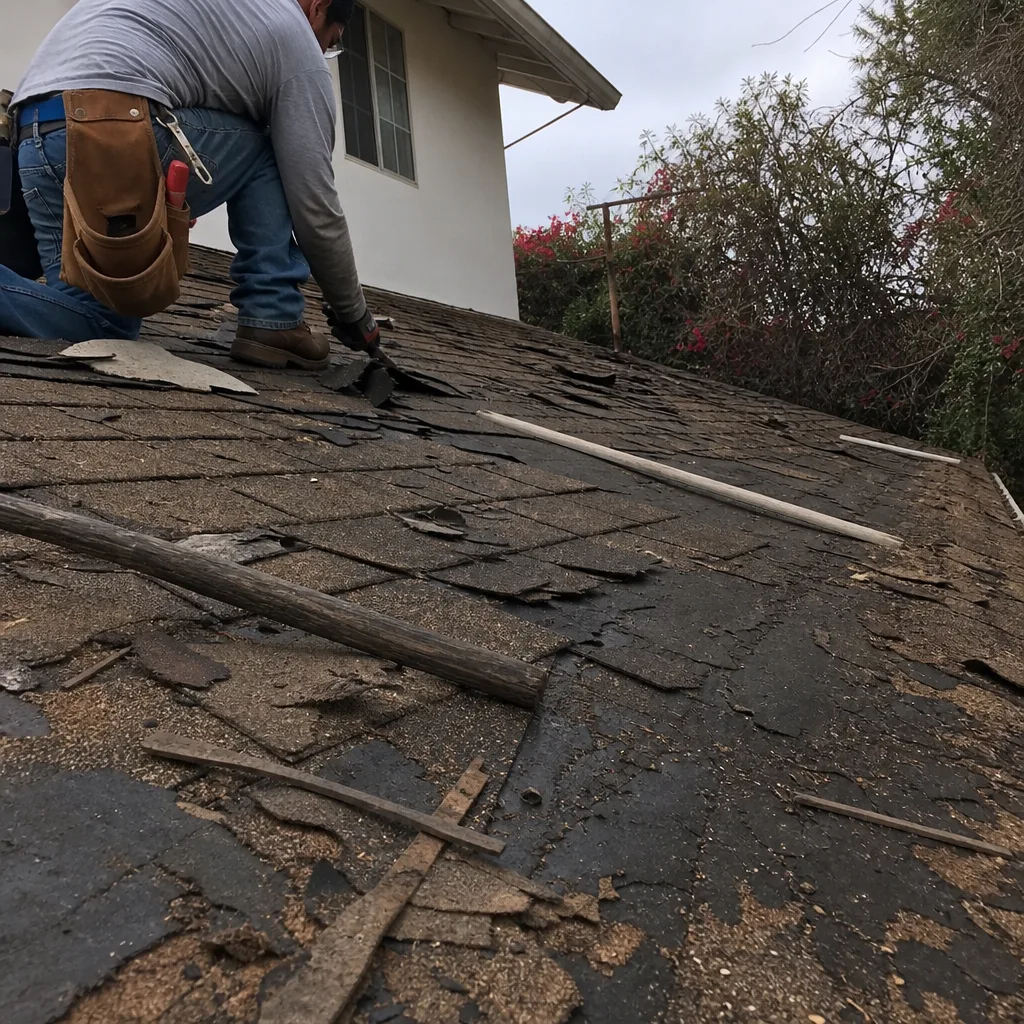 Before
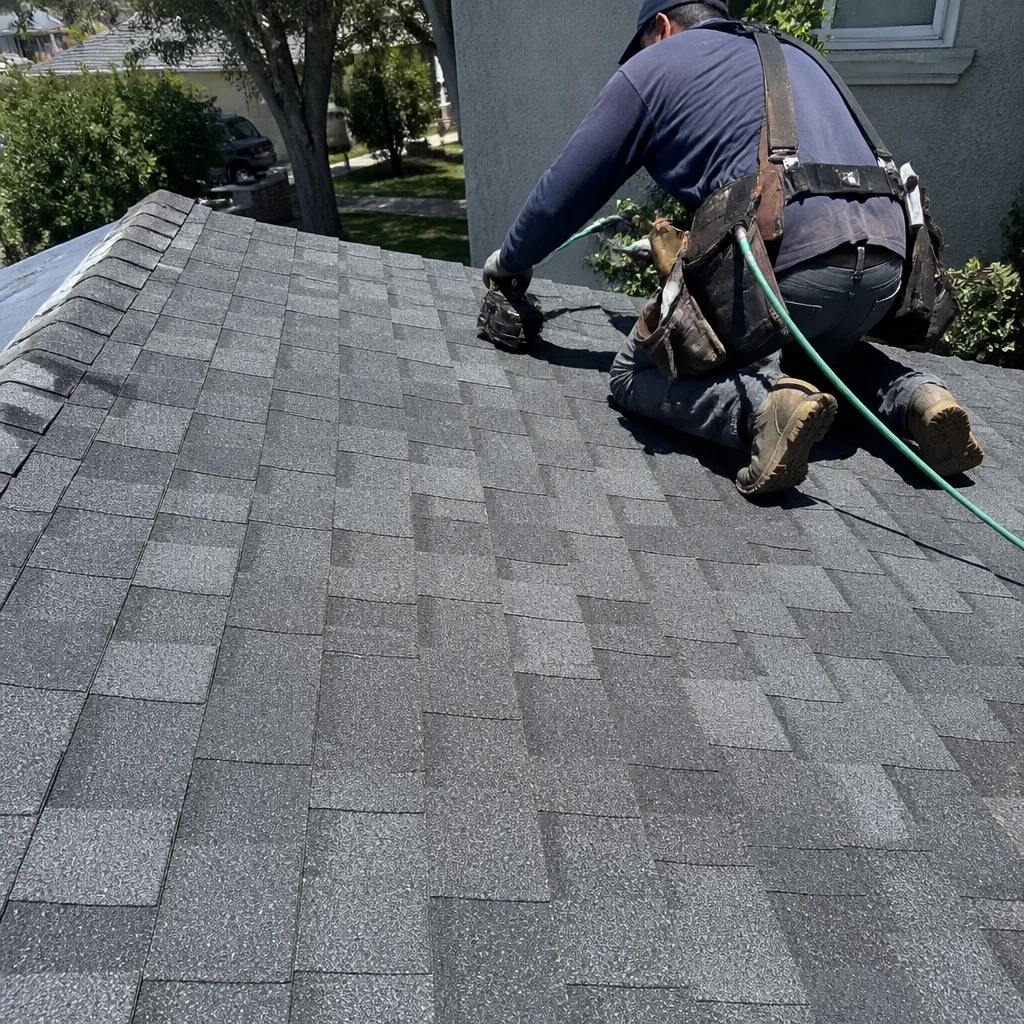 After