
Last updated October 31, 2026
 Metal roofing
 Architectural shingles
 Tile roofing
 GAF
 Owens Corning
 Flat & low-slope
Free roof inspection with deck photos before we talk money - GAF and Owens Corning certified installation
Seasonal Roofing Care for Costa Mesa: Year-Round Homeowner’s Guide
Costa Mesa receives less than 13 inches of rain annually, but nearly all of it falls in a three-month window, meaning your roof takes 12 months of sun abuse and then gets tested by rain all at once. That math drives everything about how roofing actually works here, and it’s why the traditional four-season maintenance calendar most national guides push fails Costa Mesa homeowners outright. What follows is the real seasonal rhythm of a Costa Mesa roof: two preparation windows, two maintenance windows, and a specific sequence of tasks that determine whether your roof absorbs the next storm or leaks through it. This guide covers what to do, when to do it, why each task matters for the coastal Southern California climate, and when the right move is a professional roof inspection in Costa Mesa.
Styles & brands we work with
Quick Answer
Seasonal roof care in Costa Mesa comes down to four windows: a spring drying assessment, a summer heat-inspection cycle, a September pre-Santa Ana wind preparation period, and an October-to-November pre-rain prep window. The two most important are September and October/November, and skipping either is the most common reason roofs fail when the first real storm arrives. Most Costa Mesa roof damage accumulates slowly during hot, dry months, not during rain events themselves.
Table of Contents
- The Costa Mesa Roofing Climate: Why the Standard Calendar Fails Here
- Spring: The Drying-Out Assessment Window (March – May)
- Summer: The Silent Damage Season (June – August)
- September: The Pre-Santa Ana Preparation Window
- October – November: The Pre-Rain Prep Window Most Homeowners Skip
- The Marine Layer Factor: Moisture Without Rain
- Seasonal Care by Roof Type: Tile, Shingle, and Flat Membrane
- Post-Rain Inspection Priorities in Costa Mesa
- Common Mistakes to Avoid
- When to Call a Professional
- Frequently Asked Questions
- The Bottom Line
The Costa Mesa Roofing Climate: Why the Standard Calendar Fails Here
Costa Mesa sits in a climate band that doesn’t match the assumptions baked into most roofing advice. National guides tell you to check flashing after winter freezes, clear ice dams, and watch for snow load. None of that applies here. What applies instead: intense UV exposure nearly year-round, a marine layer that delivers moisture without rainfall, Santa Ana wind events that hit in the dry season, and a compressed rainy period that concentrates all precipitation stress into roughly 12 to 15 actual rain days per year. A roof in Costa Mesa ages more from ultraviolet radiation and thermal expansion than from water exposure, which inverts the usual priority list for maintenance.
We’ve inspected hundreds of roofs across Costa Mesa, and the pattern is consistent. Homeowners who treat their roof as a set-it-and-forget-it asset discover problems in January, when the rain has already found every weak point. Homeowners who follow the four-window calendar below catch issues in September and October, when repairs are fast, dry-weather work is straightforward, and the cost is a fraction of what emergency winter repairs run. The rest of this guide walks through those windows in order.
For a deeper look at what a professional evaluation covers, see our roof inspection service page for Costa Mesa homeowners.
Spring: The Drying-Out Assessment Window (March – May)
Spring in Costa Mesa is the quietest roofing season, which makes it the smartest time to schedule work you’ve been postponing. The rain has stopped, the marine layer is thinning, and roofers have open schedules before summer heat and fall wind prep fill the calendar. The key misconception is that spring means nothing needs doing because nothing is visibly wrong. In our experience, spring is when winter rain damage becomes visible, not when it occurs.
What to Do in Spring
- Walk the perimeter of your home and look up. After winter rains, check for lifted shingles, displaced tiles, sagging gutter lines, or visible debris accumulation at roof valleys and behind chimneys. You’re not looking for water, you’re looking for evidence that water moved things around.
- Check indoor ceilings in rooms that face south and west. Costa Mesa winter storms typically drive rain from the southwest, so southwest-facing roof slopes take the brunt. Look for faint staining, bubbling paint, or discoloration on ceilings and upper walls in those rooms.
- Inspect attic spaces on a dry, sunny morning. Daylight visible through the roof deck means openings exist. Dark streaks on rafters or the underside of decking indicate past moisture intrusion. Both warrant a professional look.
- Clear debris from roof valleys, scuppers, and drains. Eucalyptus, palm, and pine debris accumulate in Costa Mesa neighborhoods with mature landscaping. Blocked drainage channels turn a moderate rain event into a roof pond, which compounds weight and seepage pressure.
The spring maintenance task most homeowners skip, and the one that directly causes leaks the following winter, is clearing the debris that accumulated during the previous rainy season. It sits in valleys and behind flashing for months, holding moisture against roofing materials through the entire dry season. That sustained contact is what degrades underlayment and sealant, not the rain itself.
Summer: The Silent Damage Season (June – August)
Counterintuitive as it sounds, summer is when the most structural roof damage accumulates in Costa Mesa. There’s no rain, no wind, and no dramatic weather event, but heat does something specific to roofing materials that rain cannot: it cycles them through daily thermal expansion and contraction. A composition shingle roof on a Costa Mesa summer afternoon can reach surface temperatures of 140 to 160 degrees Fahrenheit, cooling by 70 degrees or more overnight. That daily range stresses the adhesive strips that bond shingles, the sealant around flashing penetrations, and the fasteners holding everything down. Over a single summer, the cumulative fatigue is measurable. Over five or six Costa Mesa summers, it’s the difference between a roof that repels the January rains and one that fails during them.
Summer Inspection Priorities
- Adhesive strip integrity on shingles. Heat loosens the seal between overlapping shingles. Shingles that have lost adhesion lift easily in wind and become entry points for driven rain. Check for curl at shingle corners or visible gaps between layers.
- Flashing sealant around penetrations. Pipes, vents, skylights, and HVAC penetrations all rely on sealant that degrades faster in sustained heat and UV. Summer is the ideal time to inspect and re-seal these, because the materials are warm and pliable and the weather is stable.
- Nail pops and fastener lifting. Thermal cycling can back fasteners out of the decking. A raised fastener head eventually punctures the shingle above it, creating a pinhole leak path. These are easiest to spot in summer when flex is at its maximum.
- Tile alignment on tile roofs. Clay and concrete tiles expand and contract at different rates than the underlayment beneath them. Summer heat can reveal cracked, shifted, or misaligned tiles that would otherwise go unnoticed until water flows under them.
None of these issues announce themselves. A roof can look perfectly fine from the street in August and be structurally primed to leak by December. This is precisely why a summer roof inspection in Costa Mesa catches problems when they’re still inexpensive to address.
September: The Pre-Santa Ana Preparation Window
Santa Ana winds typically begin in September or October, bringing sustained gusts that can exceed 40 to 60 mph through the Costa Mesa foothills and canyon exits. These winds arrive during the driest part of the year, when roofing materials are already heat-stressed. The result is that a Santa Ana event doesn’t just test your roof, it actively removes anything that isn’t properly secured. Lifted shingles become airborne. Loose tiles become projectiles. Exposed underlayment then waits for the first rain, unprotected.
September is the narrow window to address wind vulnerability before the gusts arrive. The task list is short but specific.
Pre-Santa Ana Checklist
- Verify shingle adhesion on windward slopes. In Costa Mesa, Santa Ana winds predominantly blow from the northeast and east, meaning east-facing and northeast-facing roof slopes take the highest wind pressure. These are the slopes to inspect first.
- Check ridge cap and hip shingles. The highest points of a roof see the greatest wind uplift force. Ridge caps that are loose, cracked, or missing adhesive are the first pieces to go in a Santa Ana event.
- Secure or remove loose roof accessories. Satellite dishes, antenna mounts, solar panel frames, and old mounting hardware all create wind discontinuity points. Anything that wobbles by hand needs attention before wind speeds amplify the movement.
- Trim overhanging branches near the roofline. A branch that drops onto a tile roof in 50 mph wind does damage disproportionate to its weight, especially when tiles are already heat-stressed.
- Inspect the edges of flat roof sections. Flat membrane roofs are vulnerable at parapet terminations and edge flashing. Wind creates uplift pressure that peels failing membrane from the edges inward.
September is also the time to address any summer findings that haven’t been repaired yet. Roof surfaces are still warm enough that sealants and adhesives cure properly, but the extreme heat of July and August has passed. Waiting until October or November means working in cooler, sometimes damp conditions that complicate proper adhesion.
October – November: The Pre-Rain Prep Window Most Homeowners Skip
Here’s the uncomfortable truth about Costa Mesa roofs: nearly every January leak we repair could have been prevented in October with about two hours of targeted maintenance. The compressed rainy season gives you almost no margin for error once it starts. When the first significant storm arrives in November or December, whatever condition your roof is in at that moment is the condition it will be in for the rest of the wet season. There’s no dry window to fix things mid-winter.
This makes October and November the most critical months on the Costa Mesa roofing calendar. The work here isn’t complicated, but it is specific.
The Pre-Rain Sequence
- Clean all valleys, gutters, scuppers, and drains thoroughly. Every piece of debris removed in October is one less obstruction when the first storm arrives. Pay particular attention to the juncture where roof slopes meet, as these are the primary water channels.
- Test drainage with a garden hose. Run water through valleys and down the roof surface and watch where it goes. Water that pools, backs up, or disappears into gaps instead of flowing freely to the ground is revealing a problem before the rain does.
- Re-seal all penetrations. Pipe boots, vent collars, skylight flashing, furnace flues, and any other object passing through the roof surface. The sealant used here has a finite service life in the Costa Mesa sun, and October is the right time to renew it.
- Check interior ceilings one more time. Before the first rain, inspect the same south and west-facing rooms you checked in spring. New staining that appeared over summer can come from morning condensation penetrating a compromised roof system, not from rain.
- Confirm all repairs from earlier in the year are holding. Summer repairs, September wind prep, and any contractor work done in spring should be visually confirmed intact before the rains begin.
If any part of this sequence reveals damage beyond what you can confidently address, October is the cheapest time of year to hire a roofing professional. Dry-weather repair work is cleaner, faster, and less expensive than the emergency work that follows the first major storm. If the inspection reveals damage that warrants full replacement, see our roof replacement guide for Costa Mesa homeowners to understand your options before the rainy season locks in.
The Marine Layer Factor: Moisture Without Rain
The marine layer that rolls into Costa Mesa on most late nights and early mornings delivers a type of moisture stress that national roofing guides simply don’t account for. It’s not rain. It doesn’t soak a roof. What it does is sit on the roof surface as condensation for several hours each morning, then burn off as the sun rises. Over months and years, this daily cycle contributes to three specific failure modes that are common in Costa Mesa but rare inland.
How Morning Moisture Affects Roofs
- Condensation-driven corrosion on fasteners and flashing. Metal components that stay damp for hours each morning corrode faster than the same components in dry inland climates. Galvanized fasteners, in particular, show accelerated zinc depletion within a few years in Costa Mesa’s marine-influenced zones. The failure rarely looks dramatic, but a corroded fastener head that loses its seal is a pinhole leak waiting for a heavy rain to exploit.
- Mold and mildew on north-facing slopes. North-facing roof planes in Costa Mesa receive less direct sun and hold marine moisture longer. This creates ideal conditions for mildew growth on roofing materials, especially composition shingles and tile underlayment edges. The mildew itself doesn’t always cause leaks, but it signals a moisture-retention pattern that accelerates material breakdown.
- Sealant degradation at a different rate than expected. Manufacturers rate sealant life based on UV exposure, but Costa Mesa’s marine layer adds a chemical component: morning moisture interacts with airborne salts and pollutants, creating a mild but persistent corrosive film on exposed sealant. In our inspections across Costa Mesa neighborhoods, sealant around penetrations on ocean-side homes shows visible degradation 20 to 30 percent earlier than identical applications on inland Costa Mesa homes.
The practical implication is that the “five-year sealant check” rule of thumb compresses to roughly four years in coastal Costa Mesa neighborhoods, and to three years for homes within a mile of the water. This isn’t a reason for alarm, but it is a reason to adjust your maintenance expectations compared to a generic guide written for an inland climate.
Seasonal Care by Roof Type: Tile, Shingle, and Flat Membrane
Costa Mesa’s housing stock includes a mix of roofing systems: concrete and clay tile on many older and Mediterranean-style homes, composition shingle on mid-century and newer construction, and flat membrane on modern builds and commercial-adjacent residential properties. Each type responds differently to the Costa Mesa climate, and seasonal care priorities shift accordingly.
Concrete and Clay Tile Roofs
Tile roofs in Costa Mesa are common and, generally, long-lasting. But the tile itself is rarely the failure point. The underlayment beneath the tile degrades from heat and age, and the tile is just the armor on top. Seasonal care for tile roofs focuses on four things: cracked or displaced tiles (most common after Santa Ana winds or branch falls), failed underlayment visible at roof edges and penetrations, valley metal that has corroded or separated, and the mortar or foam used at ridge lines and hips that has crumbled over time. One Costa Mesa-specific consideration: older tile roofs often have lower-slope areas where ponding after rain exposes underlayment gaps that never saw visible damage. Checking those zones after each rainy season is essential.
Composition Shingle Roofs
Asphalt shingle roofs are the most common residential roof type in Costa Mesa, and they age primarily from UV exposure rather than water. The granule layer on shingles exists to protect the asphalt beneath from UV degradation. Once granules wear away, usually visible as dark patches or granules accumulating in gutters, the clock is running. Seasonal care here centers on adhesive integrity (summer heat), granule loss tracking (spring and fall), nail pop identification (summer), and sealing penetrations (October). Shingle roofs are also the most sensitive to Santa Ana wind damage, which makes September the non-negotiable month for shingle roof maintenance in Costa Mesa.
Flat Membrane Roofs
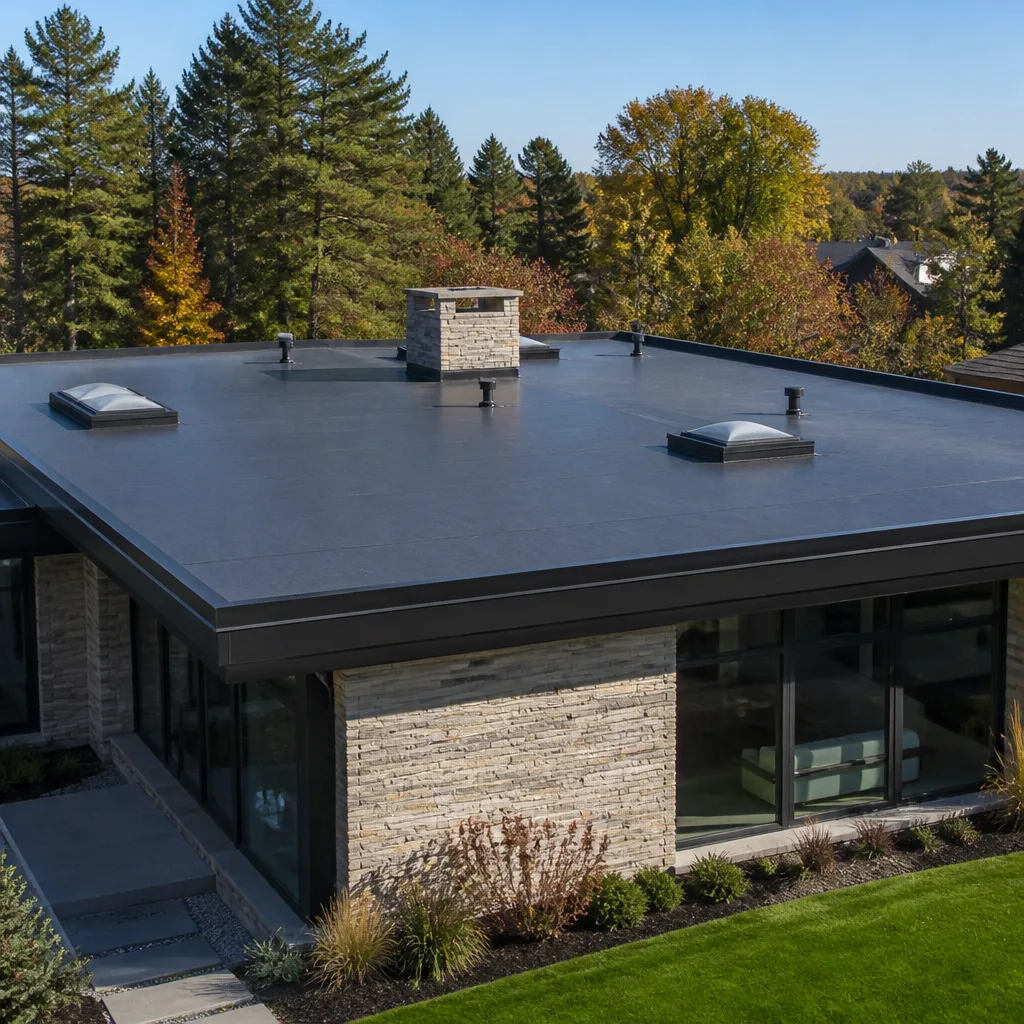
Flat and low-slope membrane roofs, common on newer Costa Mesa construction and many mid-century homes, face a different set of challenges. They rely on continuous membrane integrity rather than overlapping shedding, which means any puncture, seam failure, or edge delamination becomes an immediate leak point in winter rain. Flat roofs in Costa Mesa also sit in full sun all day, every day, and the membrane surface gets hotter than any pitched surface in the city. Seasonal care focuses on inspecting every seam and penetration twice a year (spring and fall), checking the condition of the membrane surface for cracking or bubbling (a summer inspection task), and confirming that drainage outlets are clear before the first rain. Flat roofs have no tolerance for debris accumulation, because they rely entirely on drains and scuppers to move water off the surface.
Regardless of roof type, the sequence from inspection to repair to, when needed, replacement follows the same Costa Mesa seasonal calendar. The difference is only in what you’re looking for at each checkpoint.
Post-Rain Inspection Priorities in Costa Mesa
Once the first significant rain event of the season has passed, generally in November or December, the inspection priorities shift from prevention to verification. This is the moment you find out whether your September and October work was sufficient, and whether anything slipped through. The order of inspection matters here, because you’re looking for the earliest warning signs before they become active leaks during subsequent storms.
After the First Major Rain, Check in This Order
- Interior ceilings and upper-wall corners first. Water that enters the roof system often takes days to become visible on interior surfaces. Checking 48 to 72 hours after rain catches the early stage. Look for discoloration, paint bubbling, or any change in texture, particularly in south and west-facing rooms as discussed earlier.
- Visible roof surfaces from the ground. Walk the perimeter of your home and look for tiles or shingles that moved during the storm, debris that accumulated in valleys, and any visible membrane lifting at edges on flat roofs. Document what you see with photos, which helps track changes over the winter.
- Attic inspection on the next dry day. A clear sunny morning after rain is ideal. Check the underside of the decking for dark staining, active moisture, or visible daylight. This is where you catch the leaks that haven’t made it to living spaces yet, which is the cheapest possible time to find them.
- Downspouts and ground-level drainage flow. Walk the perimeter and confirm water is flowing away from the foundation. Roofing problems and drainage problems look similar from inside the house, but the fix is very different. Costa Mesa homes on flat lots are especially prone to foundation-adjacent ponding after heavy rain, which is unrelated to roof integrity but worth noting while you’re already looking.
What you do not want to do after winter rain is assume that no visible interior leak means no problem. Water frequently enters the roof system, travels along framing or decking, and evaporates or soaks into materials without ever staining a ceiling. By the time a Costa Mesa homeowner sees water inside the house, the roof has often been leaking for weeks or months. This is the strongest argument for a professional post-rain inspection if you have any doubt about what you’re seeing from the ground or attic.
Common Mistakes to Avoid
- Skipping October because “the roof looked fine in June.” The Costa Mesa summer is exactly what damages roofs, and the October prep window is exactly when that accumulated damage would be addressed. A June inspection tells you nothing about an October roof.
- Ignoring minor granule loss on shingle roofs. Granule loss is the primary visual indicator of UV degradation on asphalt shingles in Costa Mesa. Small amounts are normal. Bare spots or granules consistently accumulating in gutters year over year are not. Waiting until the shingles crack means the roof is already past the point of routine repair.
- Cleaning gutters during the rainy season instead of before it. Debris cleared in October prevents the problem. Debris cleared in January is damage control. The difference in roof stress between a winter storm on clean valleys versus clogged ones is measurable.
- Assuming flat roofs don’t need seasonal attention. Flat membrane roofs are the highest-maintenance roof type in Costa Mesa because they have zero tolerance for drainage blockage and membrane breaches. A single puncture that would be a minor nuisance on a pitched shingle roof becomes an immediate water intrusion point on a flat roof.
- Treating all areas of Costa Mesa identically. The ocean-facing neighborhoods hold marine moisture longer. The eastern edges near the 55 and the hills catch more Santa Ana wind. A maintenance schedule that works for a Mesa Verde home may need adjustment for a home near the water. Your specific location within Costa Mesa matters.
- Using generic sealants from a hardware store on roof penetrations. Roofing sealant is formulated differently depending on the material it bonds to and the exposure it faces. The wrong sealant fails faster in Costa Mesa’s UV climate, and the failure point is precisely where the leak will occur. Professional-grade material selection matters more here than most homeowners realize.
When to Call a Professional
Some roof conditions are safe and reasonable for a homeowner to monitor from the ground with binoculars and a keen eye. Others are not. Call a professional if you see daylight through the roof deck in your attic, if tiles or shingles are missing after a wind event, if interior staining appears on ceilings or walls, if sealant around penetrations is visibly cracked or peeling, or if you have a flat roof with any membrane puncture, seam separation, or ponding that persists more than 48 hours after rain. Working on a roof, especially a two-story Costa Mesa home, carries fall risk that no maintenance task is worth. We inspect roofs from the surface with proper safety equipment, and we’re roofing specialists, not generalists. If you’re unsure what you’re seeing or what it means, Spartan Roof Repair offers free estimates in Costa Mesa. Call (855) 382-3237, and we’ll give you a straight answer about your roof.
Frequently Asked Questions
Twice a year is the right cadence for Costa Mesa’s climate: once in early fall before Santa Ana winds and rain season, and once in spring after the rainy period ends. The fall inspection is preventative and catches heat and wind damage before it becomes leaks. The spring inspection assesses what the winter rains did and sets up the summer maintenance list. Between these professional inspections, ground-level visual checks from the perimeter of your home every two to three months catch obvious issues early. Every roof is different, and age, material, and proximity to the coast all shift the ideal schedule. Call (855) 382-3237 if you’re overdue for an inspection and want a direct assessment of what your roof needs.
Roof repair costs in Costa Mesa vary widely by scope. Small targeted repairs, like re-sealing a small penetration or replacing a handful of damaged shingles, typically range from $300 to $900 depending on roof access and material. Larger repairs involving underlayment replacement, valley rebuilds, or multiple penetrations can run from $1,500 to $6,000 or more on a case-by-case basis. Tile roof repairs trend higher than shingle repairs because of material cost and the precision required for proper tile resetting. Flat roof membrane repairs vary by membrane type and the extent of the damage. The only way to know your exact number is an on-site assessment, and estimates from Spartan Roof Repair are free. Call (855) 382-3237 to schedule one.
Ground-level tasks are completely fine for most homeowners: clearing gutters from an extension ladder (with proper stabilization and a spotter), checking ceilings for staining, looking for missing or shifted tiles from the perimeter, and keeping drainage paths clear. Walking on a roof is a different matter. Pitched roofs, especially two-story surfaces common in Costa Mesa neighborhoods, carry real fall risk. Tile roofs can be damaged by improper foot placement, turning a maintenance visit into a repair. Flat roofs require training to identify membrane conditions accurately. We recommend homeowners do the ground-level observation work, and leave anything requiring roof surface access to a professional. The inspection itself is the cheap part; the fall isn’t.
The Costa Mesa climate shortens roof lifespans compared to cooler, less UV-intense regions, but the specific numbers vary by material. Composition shingle roofs in Costa Mesa typically last 15 to 25 years depending on shingle quality, ventilation, and slope orientation. Concrete tile roofs can last 50 years or more, but the underlayment beneath them typically needs replacement at 20 to 30 years regardless of tile condition. Flat membrane roofs generally last 15 to 25 years depending on membrane type and UV exposure. The single biggest factor in exceeding those numbers is the seasonal maintenance routine described in this guide. A well-maintained roof lasts significantly longer than its material average.
Water stains on Costa Mesa ceilings during dry weather usually trace to one of two sources: condensation from marine layer moisture penetrating a compromised roof system, or plumbing leaks that have nothing to do with the roof. Marine layer condensation forms on the underside of decking in the early morning, picks up dust and dirt as it drips, and leaves visible staining on ceilings below, especially in rooms under north-facing slopes that hold moisture longer. The roof system may have a small opening, degraded sealant, or insufficient ventilation contributing to the condensation collection. A professional inspection can distinguish between condensation, roof leaks, and plumbing leaks quickly. Call (855) 382-3237 and we’ll identify the actual source, not guess at it.
Call a roofer promptly, but don’t panic. A few missing shingles after a strong Santa Ana event is common in Costa Mesa and is typically a manageable repair if addressed quickly. The immediate priority is preventing water intrusion when rain arrives, which means temporary cover if rain is forecast and permanent repair before it starts. Take photos from the ground if visible, note the approximate location on the roof, and avoid any attempt to climb onto the surface in windy conditions. If you can identify where the damage is, that speeds the estimate. Roofers also get busy after major wind events, so scheduling early in the window helps. For a straight assessment of what’s actually damaged and what it will cost, call Spartan Roof Repair at (855) 382-3237. The estimate is free, and you’ll know exactly where you stand.
The Bottom Line
Costa Mesa roofing care doesn’t come down to four equal seasons. It comes down to two prep windows, two assessment windows, and the discipline to honor them year after year. The homeowners whose roofs survive decade after decade in this climate are not the ones who call a roofer when water is dripping from the ceiling. They’re the ones who clear valleys in October, check adhesives in September, inspect attic spaces in spring, and track what the summer sun is doing to their roof surface. The discipline is minor compared to the cost of neglect. If you want a clear picture of where your roof stands, Spartan Roof Repair offers free estimates in Costa Mesa. We inspect it, we repair it, we replace it. Call (855) 382-3237.
Written by the team at Spartan Roof Repair, serving Costa Mesa since 2017.
See the difference
 Before
 After
 Before
 After
 Before
 After