
Last updated October 31, 2026
 Architectural shingles
 Metal roofing
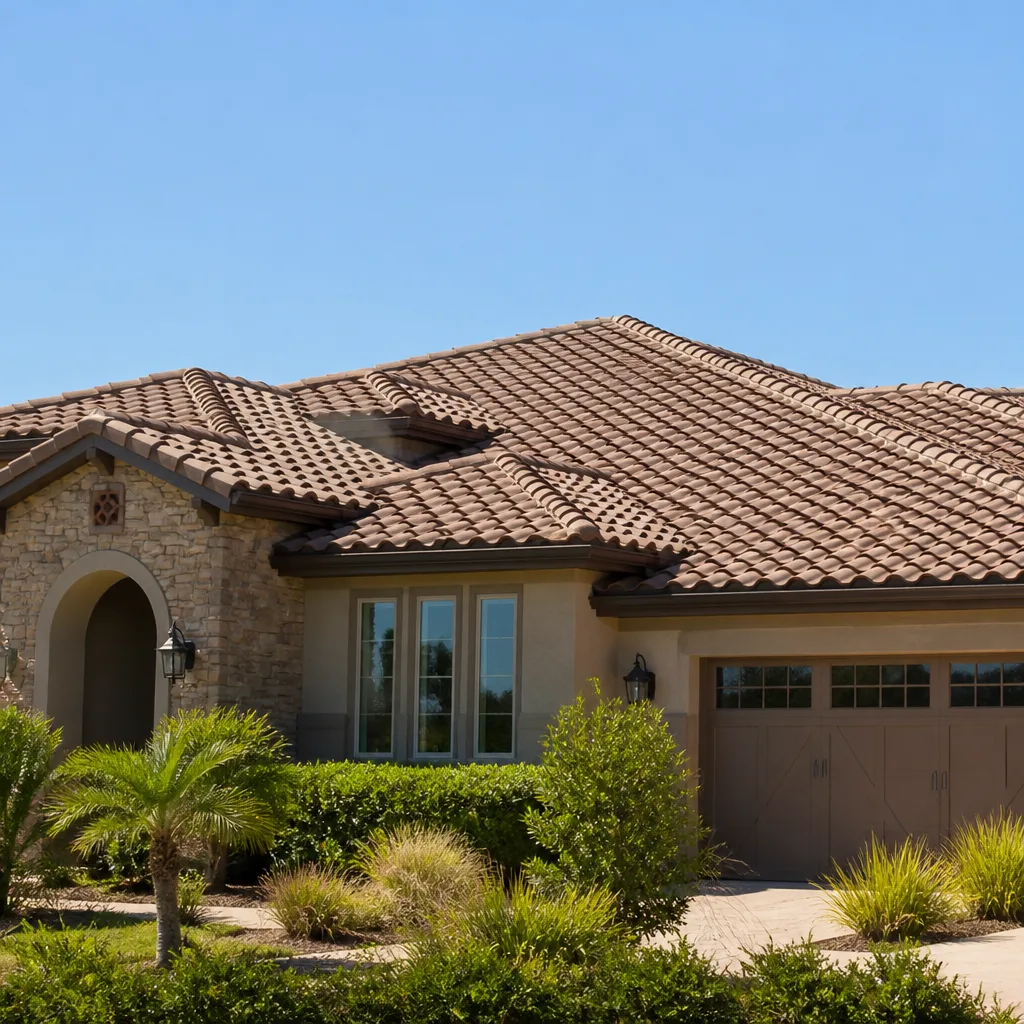 Tile roofing
 GAF
 Owens Corning
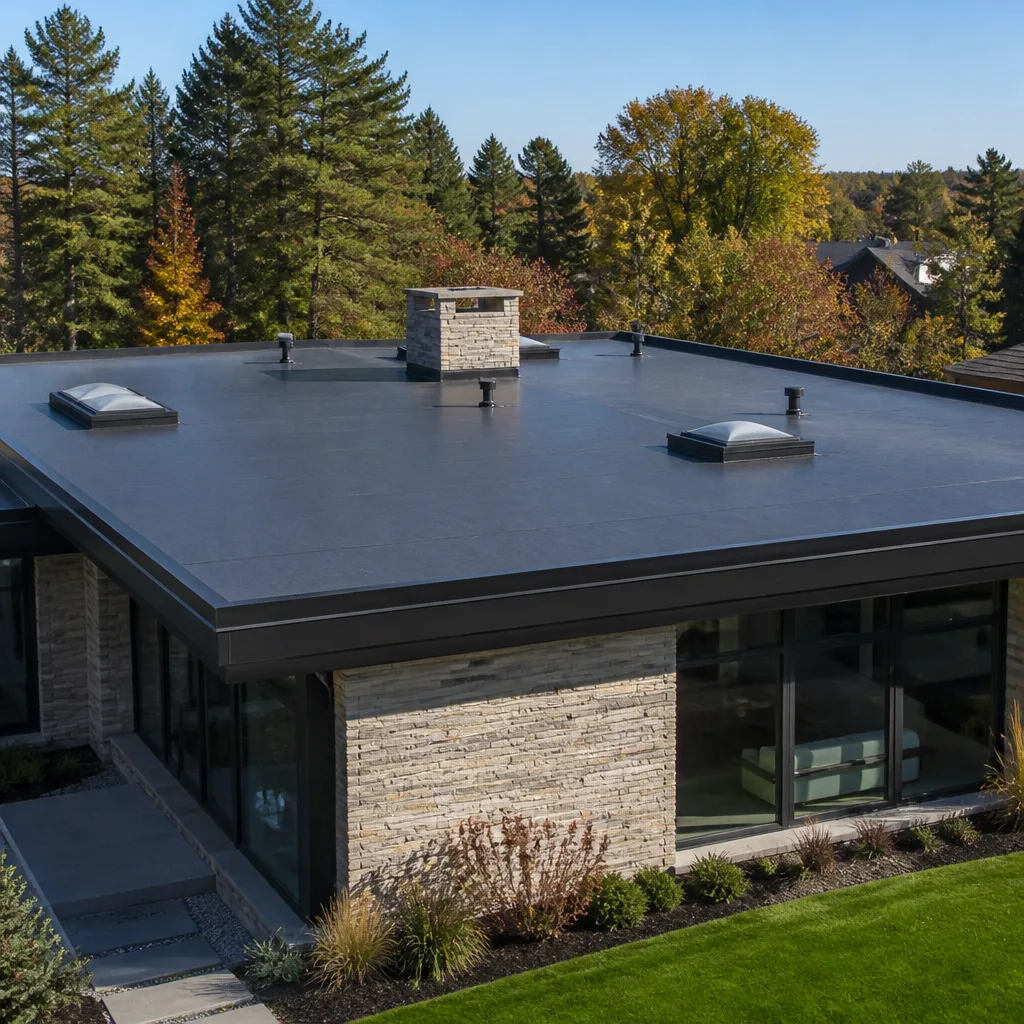 Flat & low-slope
Free roof inspection with deck photos before we talk money - GAF and Owens Corning certified installation
Roof Repair Troubleshooting: Common Problems and How to Fix Them
A ceiling water stain does not tell you where your roof is leaking. Water travels along rafters and sheathing before it drips – sometimes six to eight feet from the actual breach. Homeowners who patch the spot directly above the stain fix the wrong thing roughly half the time. This guide is built for Costa Mesa homeowners who want to stop guessing and start diagnosing. We’ll show you how to trace a roof problem back to its real cause, which Roof Repair services you can safely evaluate from the ground, and when a professional inspection is the only way to get a straight answer about your roof.
Quick Answer
Roof repair troubleshooting starts with identifying the root cause – not the symptom. Water stains, missing shingles, and attic moisture all point to one of five underlying failures: flashing breaches, fastener failure, ventilation problems, membrane deterioration, or structural movement. Start with a ground-level visual assessment, move to the attic to trace water paths, and call a roofing specialist when the cause is not visible from safe vantage points. For Roofing Emergency Preparedness Guide for Costa Mesa Homes, planning ahead saves critical time.
Styles & brands we work with
Table of Contents
- Symptom vs. Cause: The Diagnostic Mindset That Saves Money
- The Five Most Misdiagnosed Roof Problems in Costa Mesa
- What You Can Safely Evaluate From the Ground
- Flashing Failure vs. Shingle Failure vs. Ventilation-Driven Moisture
- Step-by-Step: Tracing Water Intrusion Backward
- Red Flags: When a Previous Repair Hid a Bigger Problem
- What Roof Repair Troubleshooting Costs in Costa Mesa
- Common Mistakes to Avoid
- When to Call a Professional
- Frequently Asked Questions
Symptom vs. Cause: The Diagnostic Mindset That Saves Money
Most roofing advice starts with symptoms: “You see a water stain, so you have a leak.” That’s where the troubleshooting goes wrong. A water stain is a symptom. The leak is the symptom. The cause is whatever allowed water to breach the roofing system in the first place – and that is rarely where the stain appears.
In Costa Mesa, we see this pattern constantly. A homeowner in Mesa Verde notices a stain on the bedroom ceiling. They climb into the attic, find damp insulation directly above the stain, and patch the roof deck there. Six months later, the stain returns. Meanwhile, the actual breach was at a pipe boot penetration six feet upslope, where water entered, ran along a rafter, and pooled at a low spot before soaking through. The patch fixed nothing because the patch was never in the right place.
The diagnostic mindset shift is simple: interior symptoms are downstream effects. Exterior failures are upstream causes. Before you touch anything, ask what allowed water in. That question leads to flashing, fasteners, ventilation, or membrane failure – the four root-cause categories that account for nearly all residential roof problems. Start there, and you stop paying for the wrong repair.
The Five Most Misdiagnosed Roof Problems in Costa Mesa
These are the problems we see misidentified more than any other in Costa Mesa. Each one looks like something it is not, and each one requires a different fix than what homeowners typically attempt first.
- “Missing shingles” that are actually fastener failure. When shingles slide off a roof, the instinct is to blame wind. But in Costa Mesa, where coastal gusts are common but rarely hurricane-force, a shingle that lifts and slides usually points to nail fatigue. Roofing nails corrode, back out, or were over-driven at installation. The shingle did not fail – the fastener system did. Replacing the shingle without addressing the fastener pattern means the next shingle will slide too. Look for multiple shingles missing in a line or arc. That pattern is not wind – it’s systematic fastener failure.
- A “roof leak” that is actually a ventilation problem. Attic condensation is routinely mistaken for roof leakage. When warm, moist air from the living space rises into a poorly ventilated attic, it condenses on the underside of the roof deck – especially on cool coastal mornings. Homeowners see water droplets on the sheathing or damp insulation and call a roofer to fix a leak that does not exist. The fix is ventilation: intake and exhaust balance that moves air through the attic. In Costa Mesa’s marine layer climate, this misdiagnosis is especially common because morning condensation can be heavy even on a perfectly watertight roof.
- “Flashing damage” that is actually sealant aging. Flashing – the metal that protects roof penetrations like chimneys, skylights, and vent pipes – rarely fails structurally. What fails is the sealant around it. Roofing sealants have a limited service life, often 10-15 years depending on sun exposure. Costa Mesa’s UV index accelerates that timeline. When sealant cracks and pulls away, water gets behind flashing that is otherwise intact. The fix is not replacing flashing – it is removing old sealant, cleaning the surface, and applying a proper roofing-grade sealant. If you replace the flashing without replacing the sealant, you have not fixed anything.
- “Soffit rot” that is actually a gutter drainage failure. Rotted soffits and fascia boards often get blamed on roof leaks. In many cases, the culprit is gutter overflow. When gutters clog or pitch incorrectly, water backs up and cascades over the gutter edge, soaking the soffit and fascia repeatedly. The roof edge stays dry, but the substrate underneath rots anyway. Before you schedule a roof repair for soffit rot, check the gutters. If they overflow during rain, the roof is not the problem.
- “Old shingles” that are actually a manufacturer defect pattern. Homeowners look at curling, cracking shingles and assume age. But uniform failure patterns across a roof that is only 8-12 years old often point to a manufacturing defect or installation error – not simple aging. We work with shingles from GAF, CertainTeed, Owens Corning, and IKO, among others, and we know what normal aging looks like for each product line. When failure appears uniform and premature, it is worth documenting and investigating the cause before paying full retail for a replacement you may be entitled to have covered under warranty.
What You Can Safely Evaluate From the Ground
You do not need to climb onto a roof to perform a meaningful first-line assessment. In fact, we recommend against it. Walking a roof without proper training, footwear, and fall protection is dangerous – and it can also void workmanship warranties by damaging shingles or breaking the sealant bond. Most Costa Mesa homes have two-story sections, and a fall from even a single-story roof can be catastrophic.
Here is what you can see from the ground with a pair of binoculars or a camera zoom lens:
- Shingle condition: Curling edges, missing granules, cracked tabs, or shingles that look “lifted” or out of plane. Note whether the damage is isolated or in a pattern.
- Flashing condition: Look at pipe boots, chimney bases, and valley flashings. Check for visible gaps, lifted metal, or dried-out sealant that has pulled away from the surface.
- Gutter and downspout function: During rain, watch whether water flows through downspouts or over gutter edges. Overflow is a drainage failure, not a roof failure.
- Roof shape: Look for sagging ridgelines, wavy sections between rafters, or areas that do not look flat. These indicate possible deck deterioration or structural deflection.
- Debris accumulation: Piles of leaves, pine needles, or debris that hold moisture against shingles accelerate deterioration. In Costa Mesa’s canyons and mature tree neighborhoods, this is a persistent issue.
- Ventilation evidence: Look at the roof surface and eaves. Adequate intake venting at the eave line and exhaust venting at or near the ridge are visible from the ground if you know what you are looking for.
What you cannot see from the ground: the condition of the underlayment, the integrity of the decking, the status of fasteners, the accuracy of flashing laps, and the true source of any interior water intrusion. Those require attic access, roof access, or both – which is where a professional assessment becomes necessary.
Flashing Failure vs. Shingle Failure vs. Ventilation-Driven Moisture
These three conditions look nearly identical from inside the attic: dampness on the roof deck, water staining on sheathing, or moisture on insulation. But the fixes are completely different – and applying the wrong fix wastes money while the real problem continues.
Flashing failure shows up as water staining concentrated around penetrations. Look for dark streaks on the sheathing radiating from where a pipe, chimney, or skylight passes through the roof. The staining often follows the shape of the flashing footprint. In the attic, you may see water tracking along the sides of the penetration framing. The fix: remove and replace sealant, repair or replace flashing laps, and verify that the flashing integrates correctly with the shingle courses.
Shingle failure produces broader, less focused staining. Water passes through failed shingle layers and spreads across the deck before soaking through. The staining pattern is diffuse and often appears at a low point or seam. The fix: identify the failed shingle course and determine why it failed – age, fastener failure, impact damage, or manufacturing defect – then replace the affected section with properly matched material.
Ventilation-driven moisture does not follow penetration shapes or shingle courses. It appears as uniform condensation or light, widespread dampness across the entire attic – often worse in the morning and on the north slope of the roof. The sheathing may look damp or the insulation may feel clammy, but there is no single source point. The fix: calculate attic ventilation needs, add intake or exhaust venting where airflow is restricted, and verify that bathroom and kitchen exhaust fans are properly ducted to the exterior – not into the attic.
The distinction matters because the cost difference is significant. A ventilation fix in Costa Mesa might cost a few hundred dollars. A flashing or shingle repair can run higher. Guessing wrong means paying twice. A Roof Inspection in Costa Mesa that includes attic access and moisture source identification eliminates the guesswork in about an hour.
Step-by-Step: Tracing Water Intrusion Backward
When we respond to a leak call in Costa Mesa, here is the sequence we follow. You can replicate the first steps yourself with a flashlight, a tape measure, and some patience.
- Mark the interior symptom. Go to the room where the stain or drip appears. Mark the exact location on the ceiling or wall with painter’s tape. Measure from two fixed reference points – an exterior wall and a window – so you can transfer the location upward accurately.
- Enter the attic and find the corresponding spot. Do not assume the damp insulation is the breach point. Find the area directly above your tape mark, then look upslope. Water follows gravity along rafters, trusses, and the underside of the sheathing. Trace any visible staining or moisture trail upward and toward the roof slope direction.
- Check penetrations first. Most leaks originate at penetrations – pipes, vents, chimneys, skylights, antenna mounts. Inspect the flashing around every penetration within a 10-foot radius of the interior symptom. Look for gaps, lifted metal, missing sealant, or rust perforation.
- Look for shingle failure patterns. If penetrations check out, inspect the shingle field above the stain. Look for missing, cracked, or lifted shingles. Pay attention to nail pops – raised fasteners that can lift shingles and create water entry points. Run your hand (with gloves) over the underside of the sheathing to find dampness that is not visibly stained.
- Rule out condensation. If no clear water path exists and the attic is uniformly damp, check the ventilation. Is there adequate intake at the eaves? Is exhaust venting present and unobstructed? Are bathroom fans ducted to the outside? Condensation follows airflow patterns, not water entry points.
- Verify with a controlled water test. This step requires experience and should not be attempted by homeowners. We use a controlled garden-hose water spray to simulate rain and confirm the entry point – starting low and working upslope in sections, watching from inside the attic between each section. This confirms the cause definitively before any repair begins.
This process takes a trained technician 30-60 minutes. It takes a homeowner longer, but the first three steps are genuinely useful for giving a contractor a head start – and for knowing whether the diagnosis you are paying for holds up.
Red Flags: When a Previous Repair Hid a Bigger Problem
We see this in Costa Mesa regularly: a homeowner buys a house, finds a roof repair in the disclosure documents, and assumes the roof is fine. Then the first heavy winter rain reveals otherwise. Not every repair is a fix – some are cover-ups. Here is what to look for.
- Caulked-over shingles. If you see sealant smeared across shingle surfaces instead of under them, that is a cosmetic patch, not a repair. Sealant applied on top of shingles does not stop water intrusion; it just makes the shingle look “fixed” long enough to sell the house.
- Mismatched shingle patches. A patch of shingles that does not match the surrounding roof in color, texture, or profile often means a quick repair was done with whatever was on hand. The workmanship may be fine, but the mismatch can indicate broader hidden damage that was not addressed at the time.
- Interior paint over water stains without roof work. Sellers paint ceilings to hide water damage all the time. When you see fresh paint in one small area of an older ceiling, ask whether a roof repair accompanied it. If not, the leak may still be active.
- Multiple layers of roofing. Building codes in Costa Mesa limit the number of roofing layers allowed. If a previous owner installed new shingles over old ones, the underlying deck was never inspected – and hidden deterioration may be progressing underneath. A Roof Replacement in Costa Mesa that involves a complete tear-off is the only way to assess and correct the substrate in this scenario.
- Ventilation covers or closed soffits. Sometimes a previous repair seals up ventilation to stop a perceived leak. The roof may stop “leaking” but the attic starts rotting from trapped moisture. If you notice new paint or sealant around vent openings, ask why.
- Flashing that looks “new” but wrong. Flashing replacement is only effective if the flashing laps correctly with the shingle courses. We see flashing installed backward, improperly lapped, or sealed with the wrong product. The flashing looks new from the ground, but it is not shedding water correctly.
None of these red flags means a previous contractor was dishonest. But each one is a signal that the repair may have addressed a symptom instead of a cause – and that the underlying cause is still operating. When in doubt, a full inspection that includes attic access and moisture mapping reveals what is actually happening beneath the visible surface.
What Roof Repair Troubleshooting Costs in Costa Mesa
Before you call anyone, it helps to understand what the financial landscape looks like. See our Roofing Cost Breakdown: The Costa Mesa Homeowner’s Reference for 2026 for detailed guidance. Roof repair costs in Costa Mesa vary by the type of failure and the extent of the damage. Here are typical ranges we see in our market.
- Diagnostic inspection: Many roofing companies in Costa Mesa charge a diagnostic fee ranging from $150 to $350 for a full inspection with attic access and a written scope of work. At Spartan Roof Repair, we don’t charge for estimates – a roof inspection and quote is free.
- Minor flashing sealant repair: $200 to $500 depending on the number of penetrations and accessibility. This is the cheapest fix for the most common leak source.
- Flashing replacement (single penetration): $400 to $900 depending on the penetration type – pipe boot replacements are on the lower end, while chimney or skylight flashing runs higher.
- Shingle patch (small area): $350 to $800 for a small section repair, including material match and proper fastening. Larger sections scale with square footage.
- Attic ventilation correction: $500 to $1,500 depending on whether the fix involves adding vents, correcting baffles, or re-ducting exhaust fans. This is frequently the actual fix when a “roof leak” is condensation.
- Structural repair (rotten deck or rafter): $1,000 to $4,000+ depending on the extent of the deterioration and whether framing is involved. This is the high-cost tier and the reason early troubleshooting matters – a $300 flashing repair left unaddressed becomes a $3,000 deck replacement.
Every roof is different, and these numbers are ranges – a specific quote requires an on-site assessment. What we can tell you is that on roofs where the real cause is identified early, repair costs in Costa Mesa run dramatically lower than on roofs where symptoms were patched for years while the underlying cause continued to operate.
Common Mistakes to Avoid
- Patching the ceiling stain without finding the roof entry point. The stain will return because the water is still entering. You have only fixed the symptom, not the cause.
- Replacing a shingle without checking the fasteners beneath it. If the nails failed, the new shingle will fail the same way. Check the fastener pattern or the repair will not last.
- Using household caulk on roof penetrations. Interior caulk is not formulated for UV exposure, temperature swings, or standing water. It cracks in months and the leak returns. Use a roofing-grade sealant.
- Assuming a damp attic means a leak. In Costa Mesa’s coastal climate, condensation is often the culprit. Ventilation is the fix, not shingle work.
- Ignoring small stains or “minor” dampness. Water intrusion does not stay minor. What starts as a small stain becomes deck rot, mold, and structural repair. Early action is always cheaper.
- Hiring a generalist to diagnose a roof problem. A contractor who does kitchens, bathrooms, and roofs as a side service does not have the focused diagnostic depth that a roofing-only specialist brings. The wrong diagnosis costs more than the right one.
- Climbing on the roof without proper safety gear and training. Falls from roofs are among the most common causes of serious home-repair injuries. The assessment you can do from the ground with binoculars covers most visible issues safely.
When to Call a Professional
Some roof problems are visible and straightforward. Others are not. Call a professional when: the water intrusion source is not visible from the attic or ground; the attic shows widespread dampness and you cannot tell whether it is condensation or a leak; previous repairs have failed and the problem has returned; the roof has multiple layers and hidden damage is suspected; flashing around chimneys or skylights shows saturation that may have compromised the underlying framing; or a roof is older than 15 years with active leaking – at that age, patching may not be the right financial call, and a replacement consultation is warranted. Spartan Roof Repair offers free estimates in Costa Mesa – call (855) 382-3237 to schedule one. We inspect it, we repair it, we replace it. No hand-offs. No second opinions required from a different contractor.
Frequently Asked Questions
Condensation in a Costa Mesa attic is usually widespread, uniform, and worse in the morning – it forms on the sheathing and insulation with no single point of origin. A leak is localized, creates a visible water path, and stays wet after the attic has aired out. If the dampness is everywhere and no water trail exists, check the ventilation before calling for a leak repair. Call (855) 382-3237 if you need help making the distinction – we’ll assess it on site for free.
You can slow water entry temporarily, but you cannot fix a roof leak from inside the attic. Interior patches – sealant, tarps, or foam – do not address the exterior breach that is allowing water in. The roof continues to deteriorate underneath the patch. A proper fix requires exterior access, correct material matching, and verification that the repair sheds water correctly.
Most homeowners in Costa Mesa pay between $200 and $900 for a typical repair – flashing sealant work, a small shingle patch, or a single penetration fix. Structural repairs run $1,000 to $4,000 or more. The exact cost depends on the cause, the extent, and the materials. Call (855) 382-3237 for a free estimate with no diagnostic fee and a written scope of work.
When a repair fails, the most common reason is that the original diagnosis addressed a symptom rather than a cause. The water entry point was never actually sealed, or a secondary failure – fastener fatigue, ventilation deficiency, or a flashing lapse – was missed. A repair that fails within months should trigger a full attic-to-exterior inspection, not another patch.
We install and service products from seven major roofing brands, including GAF, CertainTeed, Owens Corning, and IKO, so we are equipped to match repairs to nearly any existing roof in Costa Mesa. You do not need to know your manufacturer before calling – we identify the material during the inspection and match it correctly. A straight answer about your roof is always the goal, whatever brand you have. Explore more guides & resources to protect your investment.
Most minor roof repairs in Costa Mesa do not require a building permit, but larger repairs – structural work, deck replacement, or anything that alters the roof system’s ventilation or load path – may trigger permit requirements. We handle all necessary permitting as part of the scope of work when a repair crosses that threshold. No permit surprises after the fact – it’s written into the estimate.
The Bottom Line
Roof repair troubleshooting starts with a question: what allowed water in? Not where is the stain. Not which shingle is missing. The cause of a roof problem is almost always upstream from the symptom, and homeowners who diagnose by symptom pay for the wrong repair more often than not. In Costa Mesa, where coastal moisture and UV exposure accelerate roof deterioration, the cost of misdiagnosis compounds quickly. Learn to read the signs: fastener patterns instead of “wind damage,” condensation instead of “leaks,” sealant failure instead of “flashing failure.” Then call a roofing specialist when the cause is not visible from safe vantage points. Spartan Roof Repair offers free, no-obligation roof estimates in Costa Mesa. Call (855) 382-3237 to schedule yours.
Written by the team at Spartan Roof Repair home, serving Costa Mesa since 2017.
See the difference
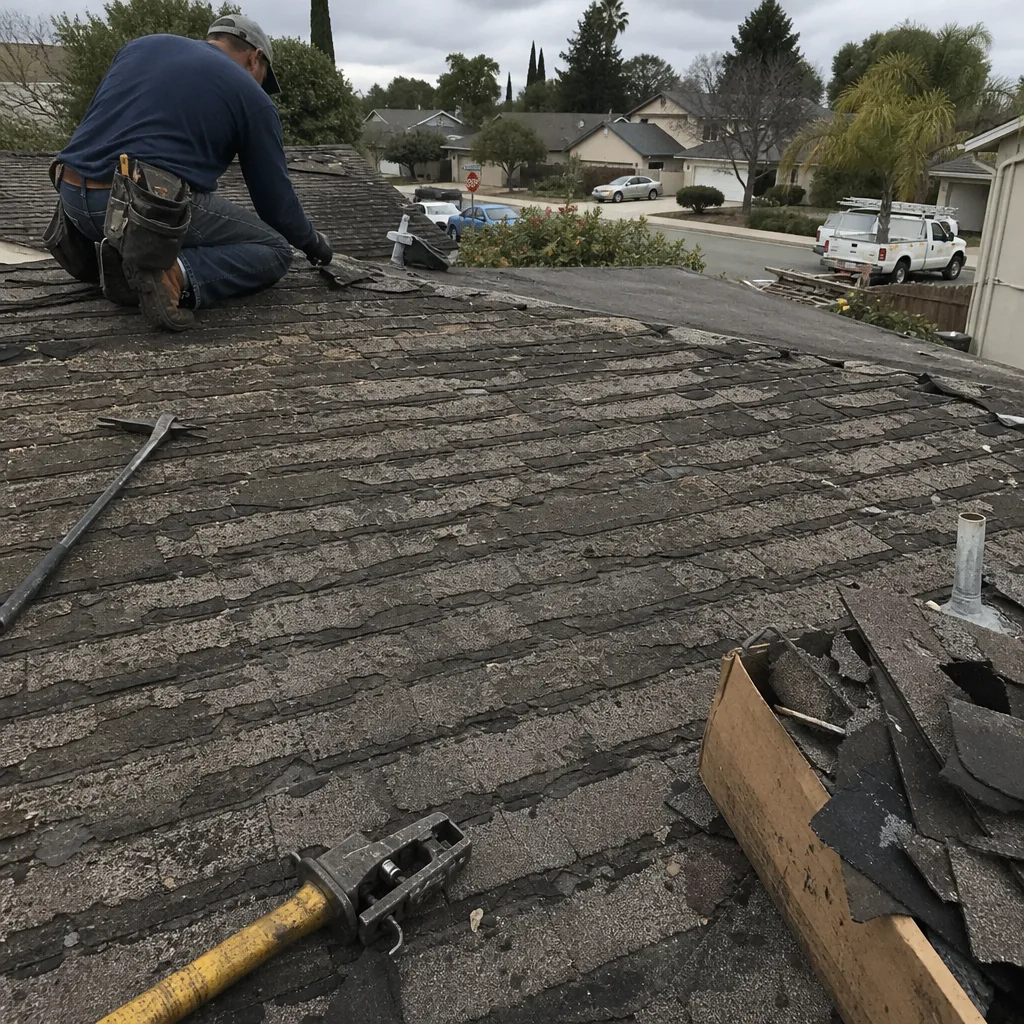 Before
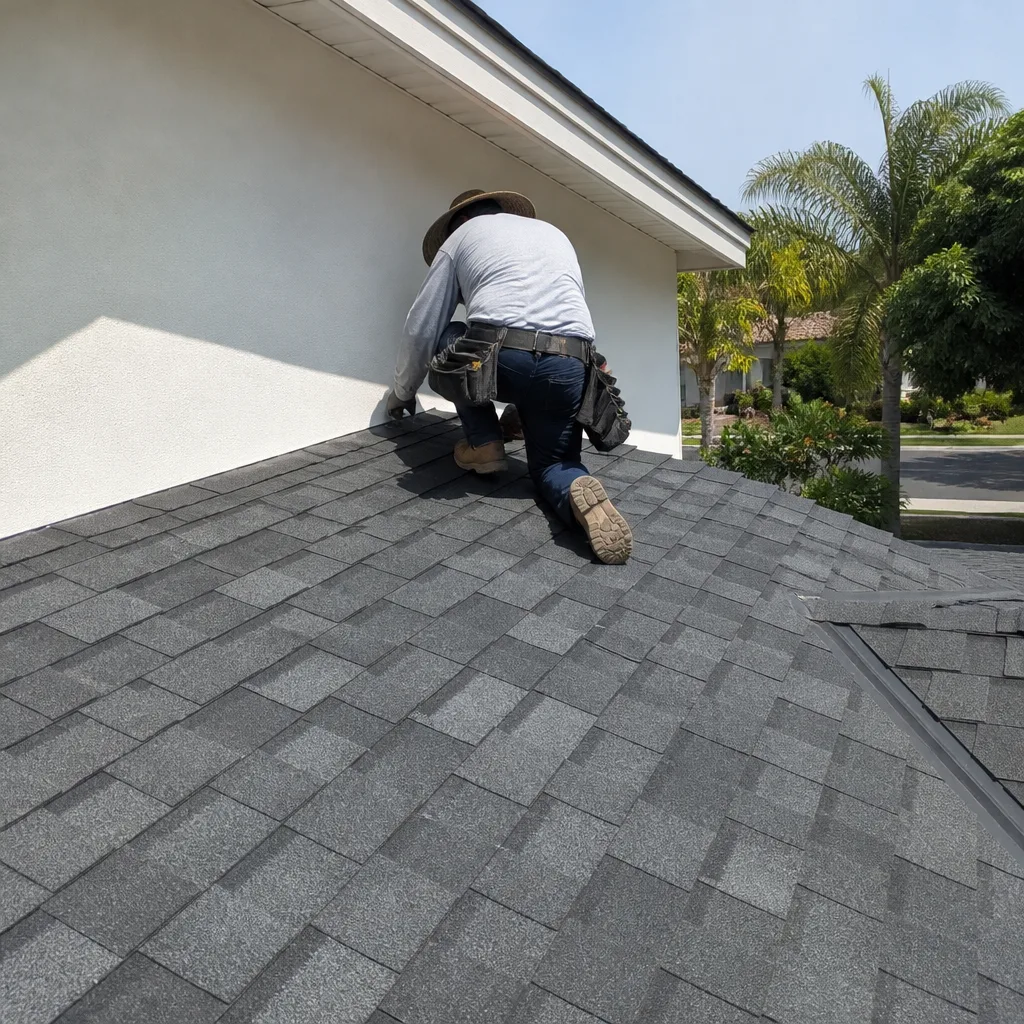 After
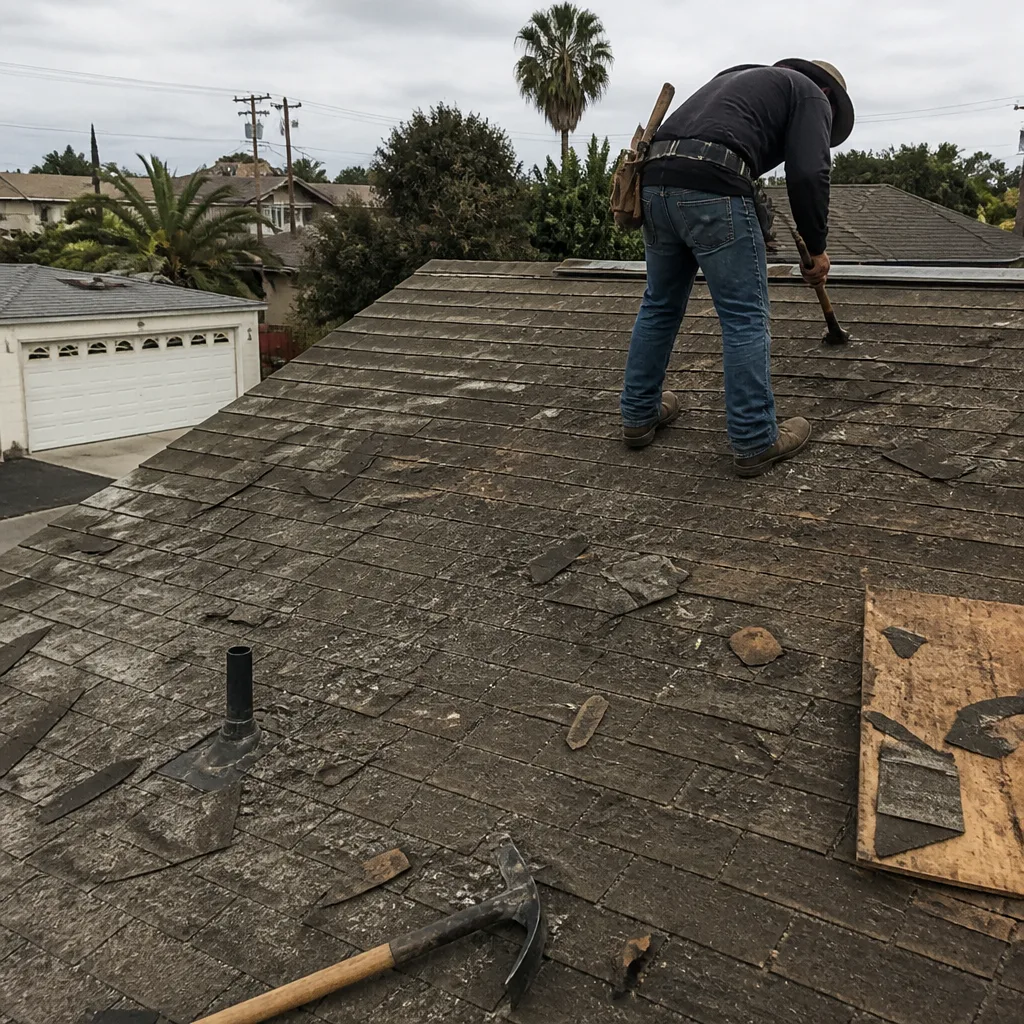 Before
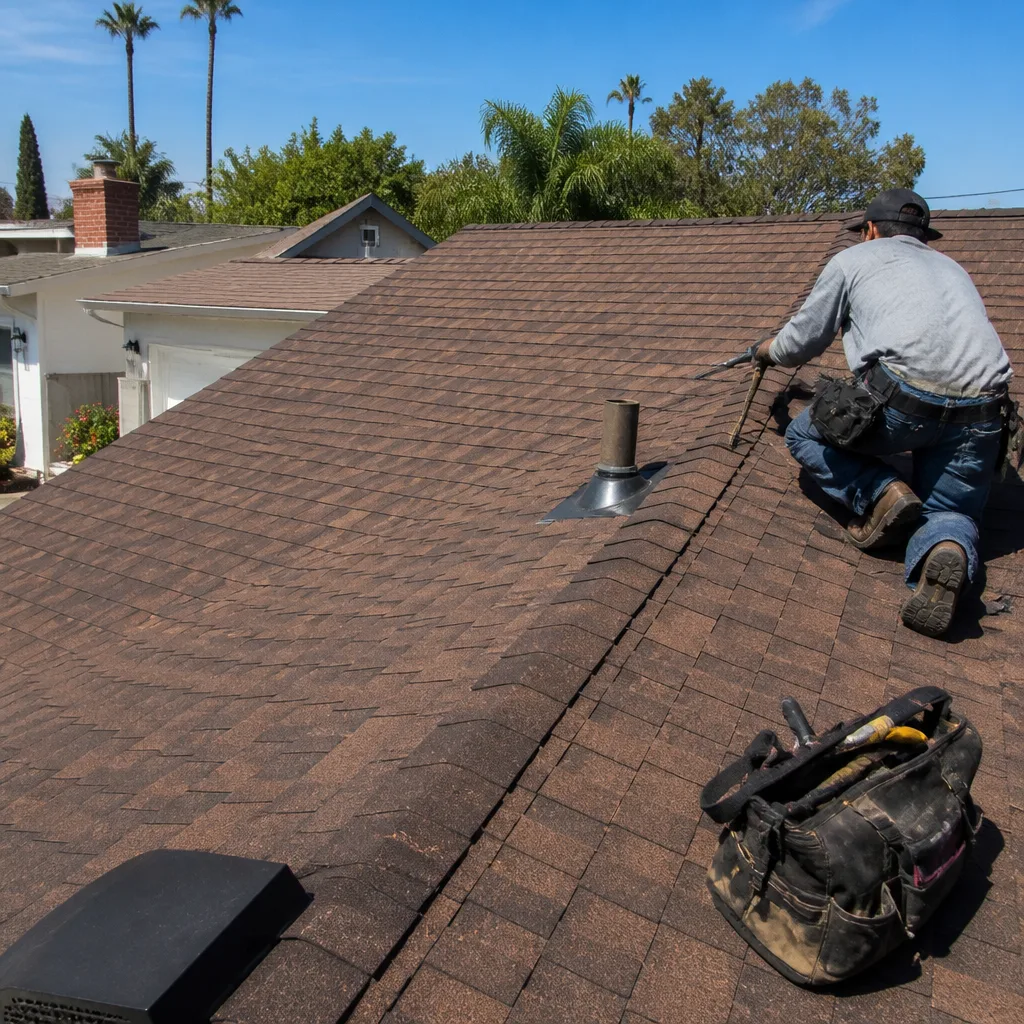 After
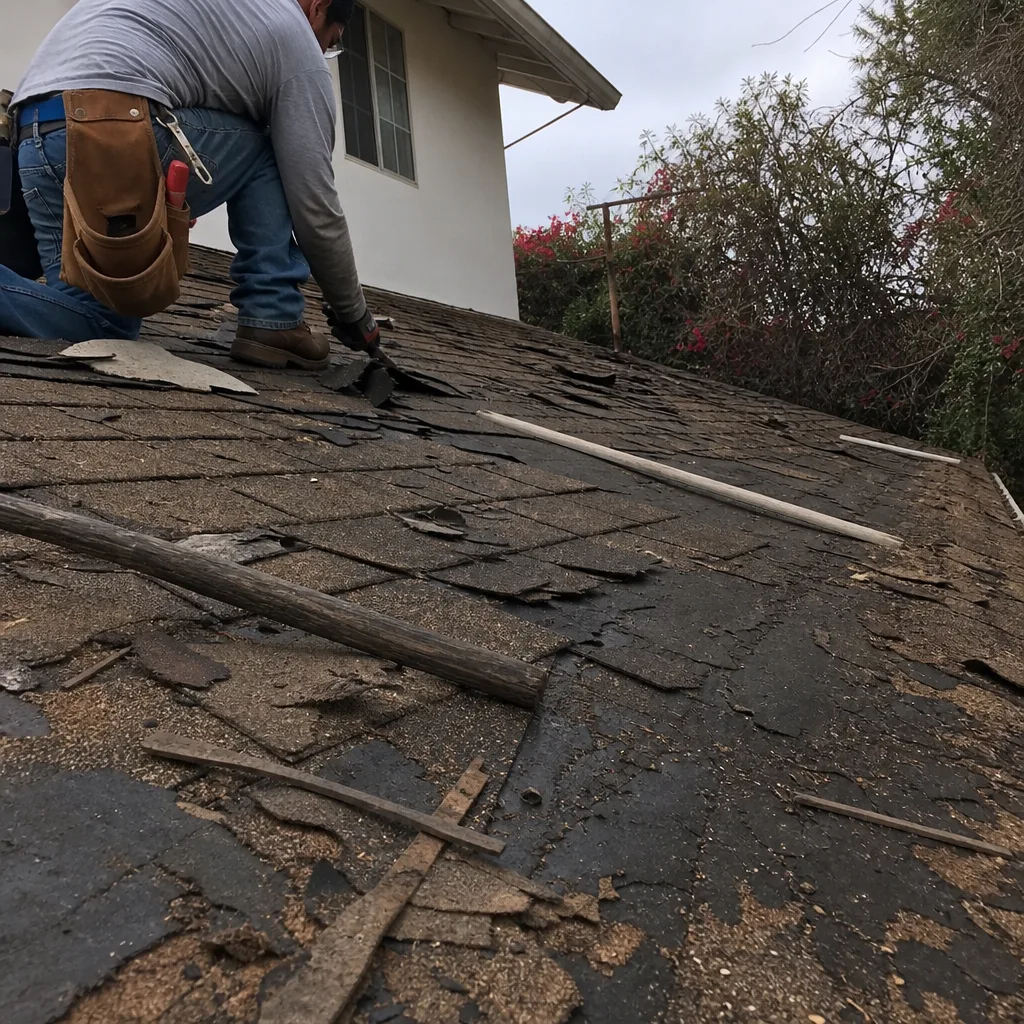 Before
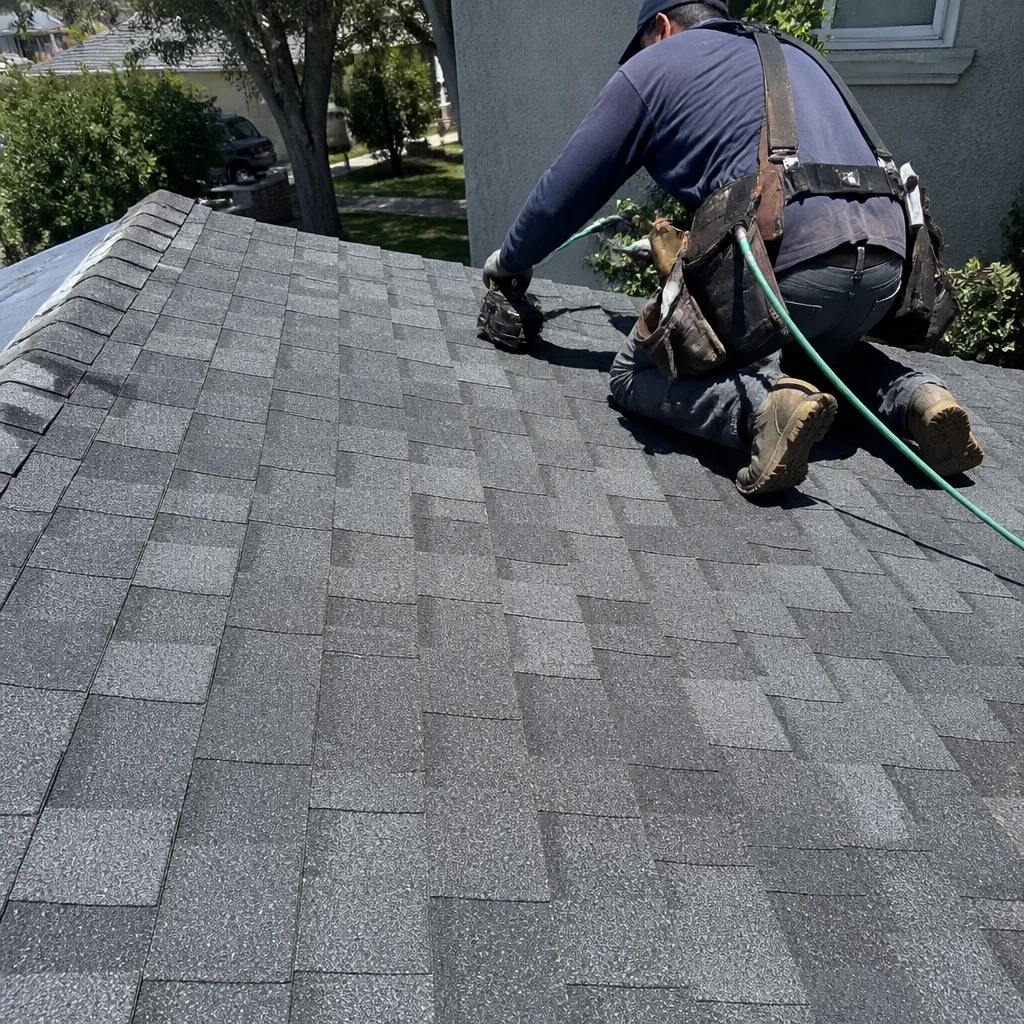 After